It doesn’t take much digging to learn that Starbucks has undergone some major changes over the past few years.
In Q4 2024, the brand’s US sales dropped 6%, resulting in a 2024 fiscal year with 2% lower global sales than in 2023. Near the end of 2024, Brian Niccol was appointed as Starbucks’ brand-new CEO, bringing a ton of fresh ideas to the table.
Now in 2026, Starbucks has made massive efforts to turn things around, from collaborations and commercials to revamped rewards and recentering coffee on the menu.
But is it really working? And what can we learn from Starbucks’ recent marketing endeavours?
As it turns out — we can learn a lot.
In this blog, we’ll take you through the past few years of Starbucks’ marketing efforts, exploring the new changes they’ve made, why they’ve worked, and how you can apply the same learnings to your coffee shop.
But before we get too far, we need to set the scene by exploring the backbone to this entire endeavor: Brian Niccol’s “Back to Starbucks” strategy.
Brian Niccol’s “Back to Starbucks” Strategy
Back in August 2024, Starbucks went through a significant leadership change. On August 13, 2024, Brian Niccol — the then-CEO and Chairman of Chipotle — was appointed Starbucks’ new CEO and Chairman, a change set to take effect in September 2024.
“I have long-admired Starbucks iconic brand, unique culture, and commitment to enhancing human connections,” said Niccol in the press release about his appointment. “I am energized by [the] potential to drive growth and further enhance the Starbucks experience.”
And he did not waste time getting started.
On September 10, 2024 — just one day into his tenure as CEO — Niccol shared a welcome message to the Starbucks community.
He expressed excitement about the role, highlighted the importance of coffee… and shared observations that Starbucks had lost some of its sparkle.
“Over the past few weeks, I’ve spent time in our stores, speaking with partners and customers, and talking with teams across [departments],” said Niccol. “[And] there’s a shared sense that we have drifted from our core. We have an opportunity to make the store experience better for our partners and, in turn, for our customers.”
Since then, Niccol has made significant strides to bring Starbucks back to its core values and quality standards — and here’s how he’s been making that happen.
The 3 Key Elements of Starbucks’ Marketing Strategy
Starbucks’ new marketing strategy in 2026 has a three-pronged approach: refocus on high-quality coffee and coffee beverages, reduce discount-driven offers in favor of delivering wider value, and work on better serving non-Starbucks members with menu-wide value.
Let’s dive a little deeper into each element and explore how they’ve been making it happen.
1 — Refocusing on Quality Coffee
Niccol’s “Back to Starbucks” strategy aims to refocus the brand’s commitment to coffee by improving the product’s quality and committing to marketing efforts that showcase Starbucks’ “premium coffee beverages.”
“I have always loved Starbucks Coffee [but haven’t] fully appreciated the quality and care that goes into every cup,” said Niccol in the brand’s Q4 2024 earnings call. “From the work of our agronomists to support tens of thousands of independent coffee farmers to our master roasters, [high-quality equipment, and skilled baristas, our] marketing needs to tell our coffee story.”
Since that earnings call, Niccol has made a few notable changes to support a stronger marketing focus on coffee — the first of which involved their two newest coffee farms.
 Source: Starbucks
Coffee Network Expansion
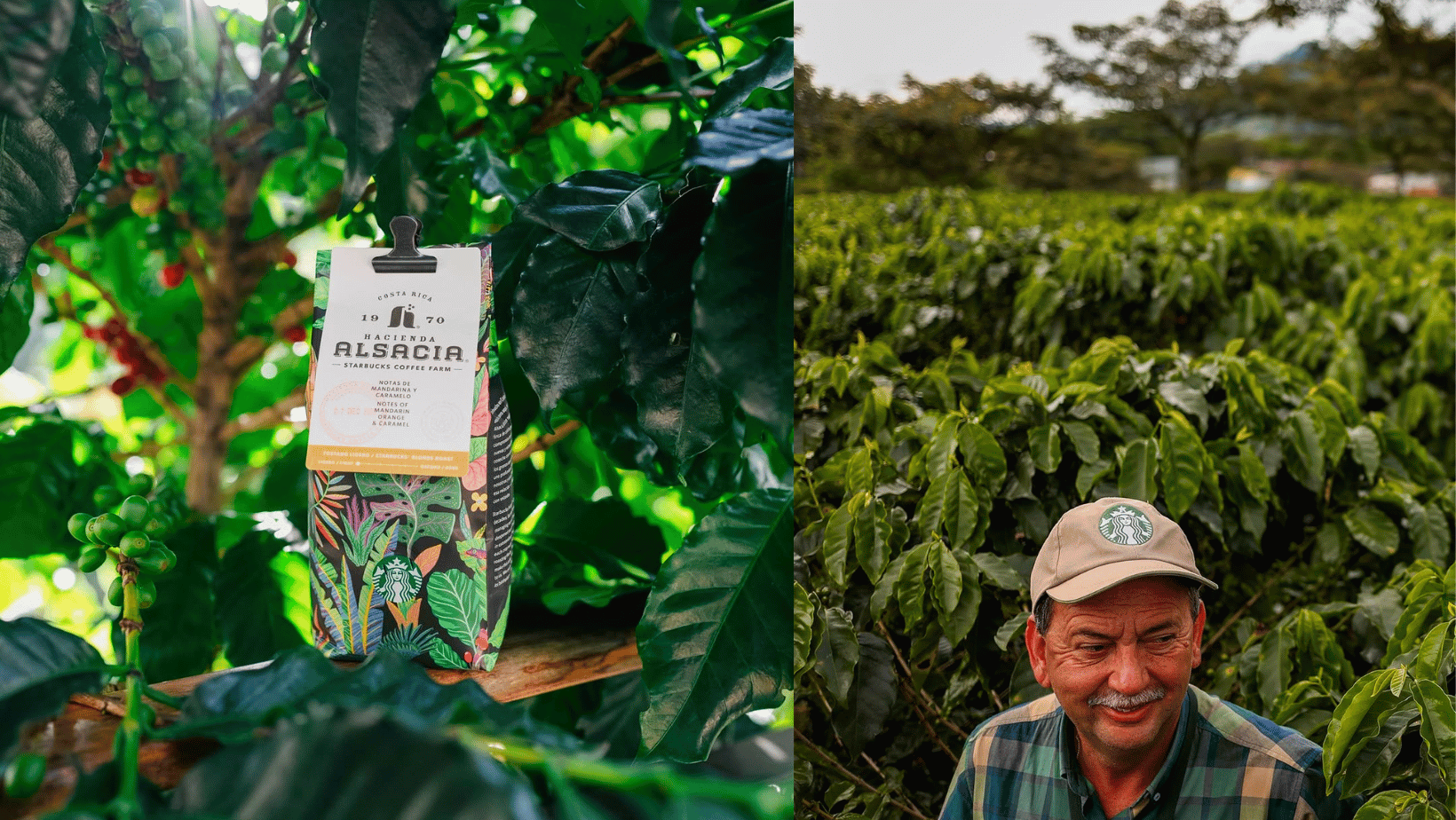
On October 3, 2024, Starbucks announced an “expansion of [their] collaborative coffee innovation network,” adding two new coffee farms in Guatemala and Costa Rica.
Roberto Vega, VP of Global Coffee Agronomy, R&D, and Sustainability at Starbucks, explained that the new coffee farms would help “develop solutions [to] improve coffee productivity and quality” as per Niccol’s strategy, while empowering local farmers to thrive in an ever-changing climate.
Throughout 2025, the brand maintained their commitment to new coffee farms, too. Starbucks’ 2025 Annual Impact Report stated that over $100M in financing had been deployed to farmers around the world through the Global Farmer Fund, while also donating over 100M coffee trees to those same farms.
Recentering “Classic” Coffee
On top of committing to quality-focused coffee farming, Starbucks has also altered their content marketing efforts, highlighting coffee and coffee beverages more heavily than in the past.
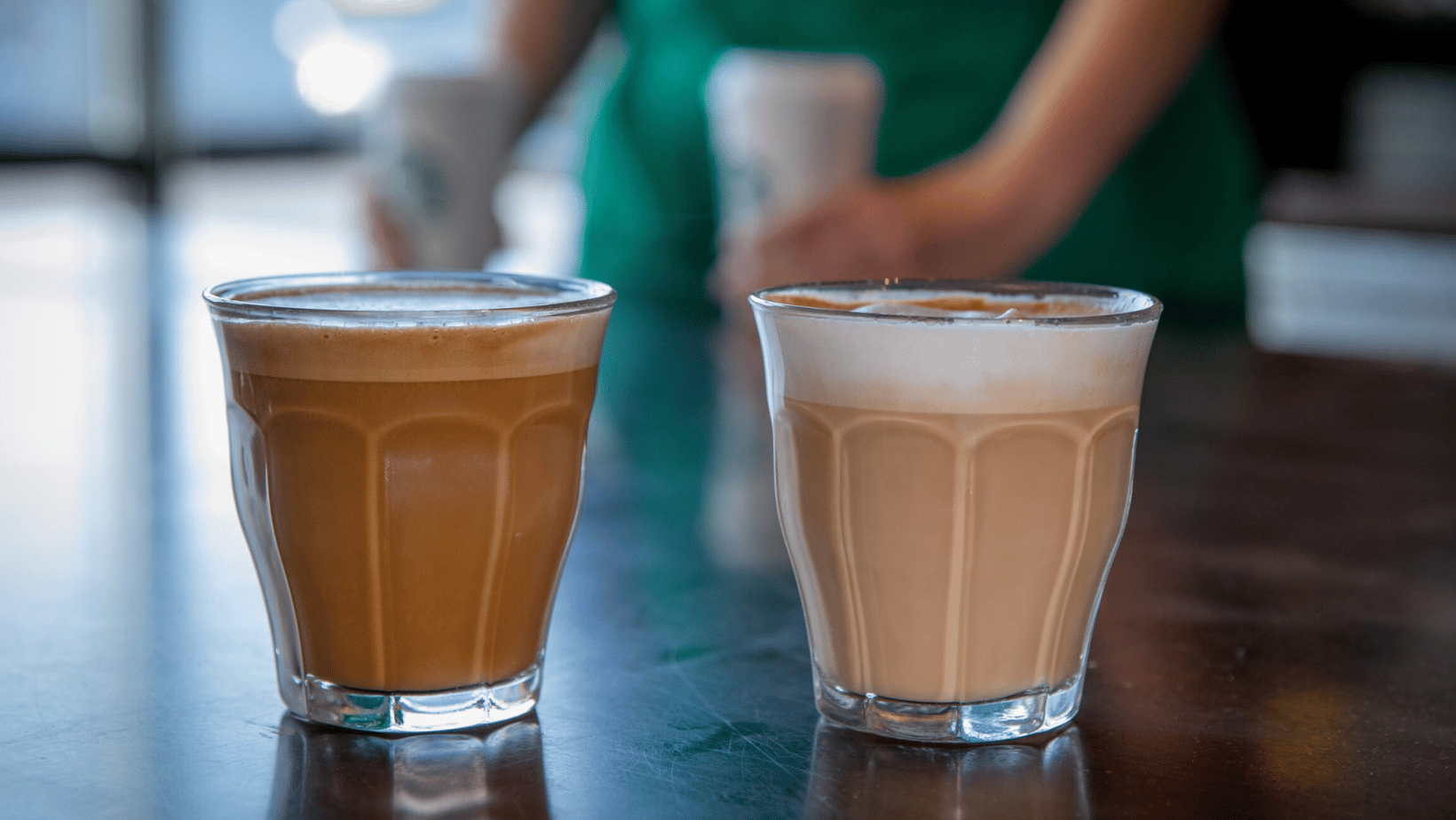
Starbucks’ January 2025 release of the Cortado is a prime example of the brand’s coffee-focused endeavours.
While Starbucks is no stranger to regularly innovating and releasing new drinks, the Cortado has been marketed fairly aggressively across all platforms, including:
- A new Cortado banner on the Starbucks website and mobile app
- A “Starbucks Stories” piece on the Cortado (with a follow-up piece on espresso)
- Dedicated social media content shared across Instagram, Facebook, and TikTok
… and that’s excluding the influx of user-generated content about the Cortado on personal blogs, YouTube channels, news outlets, and more
Coffee-Focused Ad Campaigns
Starbucks’ commitment to keeping coffee in the spotlight has continued in 2026, most notably with the brand’s “The Magic of Coffee” ad campaign.
Created and directed by David Gelb of Chef’s Table fame, the ad is “designed to showcase [the] magic that happens long before the first sip,” from its origins at a coffee farm to becoming a masterfully made cappuccino.
“Coffee is at the heart of the Starbucks experience, and this work is a celebration of the global journey, care and craft behind every cup,” says Erin Silvoy, SVP, Global Marketing & Channel Development. “[This ad highlights] our ongoing commitment to quality and to creating moments of connection that feel meaningful.”
2 — Reducing Discount-Driven Offers
The second key area of Starbucks’ new marketing strategy focuses on reducing the brand’s discount-driven offers — without totally removing them.
Great Value Across The Menu
One of Starbucks’ most significant efforts toward more straightforward pricing (and fewer discounts) has been equalizing the value across the regular menu.
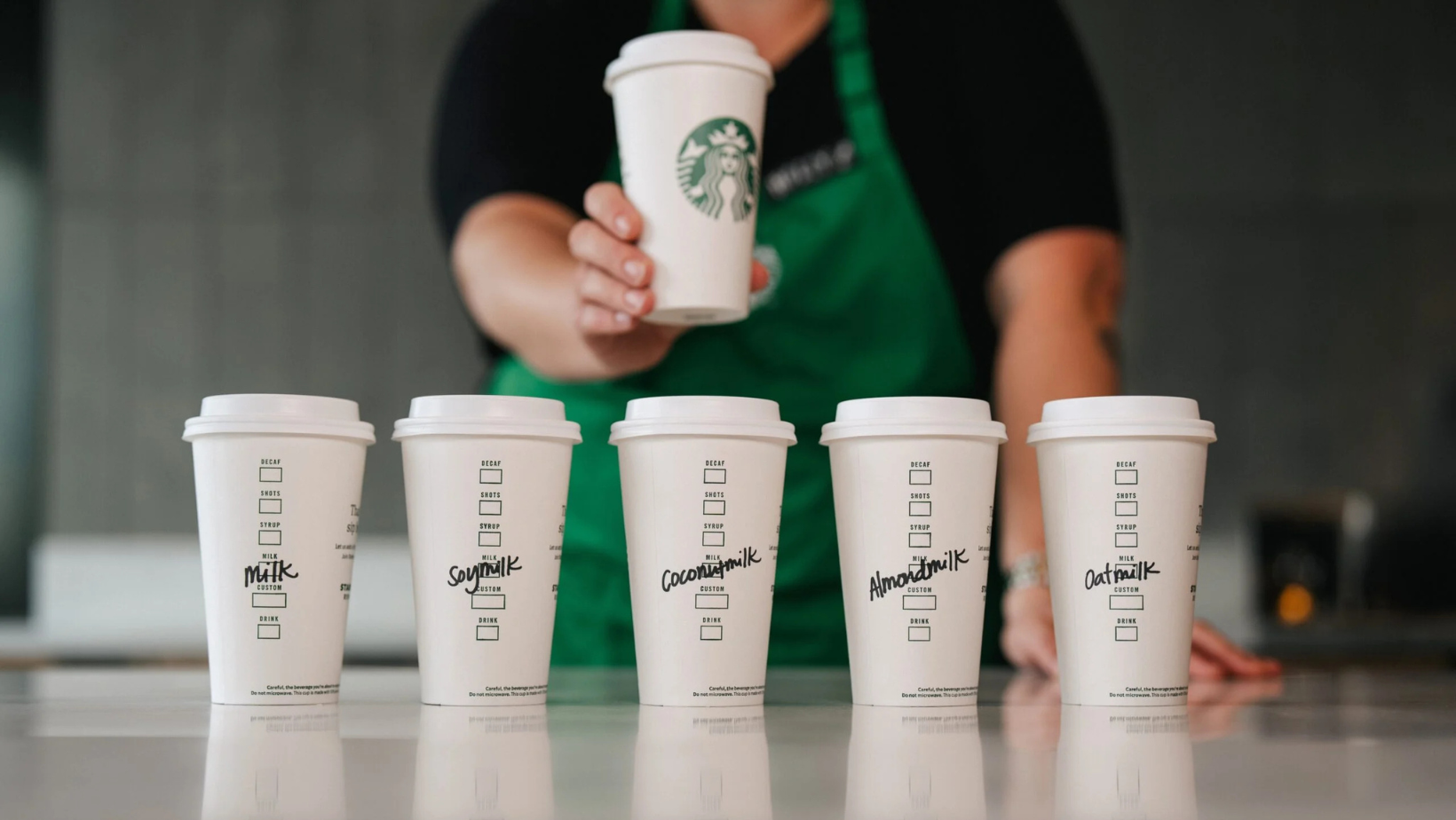
One way they’ve done that is removing the upcharge for milk alternatives. Typically, soy, oat, almond, or coconut milk would come with an upcharge of <$0.80 per drink, but on November 7, 2024, the coffee brand announced they’d scrap the dairy-free upcharge entirely.
The brand did the same thing with flavor customizations in June 2025. Instead of customers paying $0.80 for chai concentrate and $0.50 for dried fruit, everything now costs a flat $0.80, and classic syrup is free.
Ditching Blanket Discounts
According to Niccol, making less-frequent product discounts part of the “Back to Starbucks” marketing strategy is designed to resolve several issues the brand has faced in the past.
“[Discount-driven] offers [have] proven ineffective, diluted our premium positioning, overburdened our baristas, and detracted from a consistent customer experience,” Niccol said in the brand’s last earnings call. “We’re working to make every visit worth it for our customers with straightforward pricing, timely service, and a more consistent, enjoyable cafe experience.”
This means ditching the blanket discounts that offer deals to everyone on everything at any time, and switching to a more intentional rewards model that speaks to guests on a more individual basis.
Targeted, Member-Only Deals
Now, while introducing member-only deals isn’t quite the same as removing discounts, it still works toward Niccol’s wider goals: delivering value without blanket discounts for everyone.
In January 2026, Starbucks unveiled a brand-new loyalty model intended to “deliver more meaningful value, personalization, and engagement” for members. That meant new and exciting rewards like redeeming 60 stars for $2 off and Free Mod Mondays.
“Starbucks Rewards has always been about creating connection, and we’re evolving the program based on what our members told us matters most, offering faster, more meaningful benefits that make them feel appreciated,” said Starbucks’ Global Chief Brand Officer, Tressie Lieberman. “This evolution is a key milestone in our Back to Starbucks strategy and will reinvigorate what it means to be a Starbucks Rewards member.”
 Source: Starbucks
3 — Looking Beyond Starbucks Rewards Members
The third — and final! — key area of Starbucks’ marketing strategy involves catering to audiences beyond Rewards members.
Broad-Reach Brand Advertising
Niccol wants to look beyond Starbucks’ already loyal Rewards members with his “Back to Starbucks” marketing initiatives, reaching brand-new audiences in brand-new ways.
One way Starbucks planned to do that is with a series of new, wide-reaching ads, including “Hello Again.” This 60-second ad was designed to be a “tribute to [Starbucks] customers and Green Apron Partners,” set to AC/DC’s Thunderstruck to mimic a “bustling Starbucks store.”
Over the holidays, Starbucks launched “Drawn Together,” a love story that plays on making connections during the most festive time of year. The ad even earned 4.0 stars on System1’s test Your Ad scale predicting long-term effectiveness.
More Collabs and Cultural Tie-ins
Starbucks also leaned into pop culture over the past few years, working hard to reach more people through their favorite cultural icons.
That included a listening party and glittery drinks to celebrate Taylor Swift’s “The Life of a Showgirl,” a curated beverage collection inspired by the characters in “The Devil Wears Prada 2,” an exclusive MrBeast drink to celebrate the brand’s sponsorship of BeastGames, and a Miffy-themed merch collection that launched across North America.
Starbucks even solidified their place as the Official Coffee Partner for the LA28 Olympic and Paralympic Games and Team USA, so you can expect to see them in the media a lot more over the next two years.
Brand-New Creative Partners
As part of their efforts to reach new (and bigger) audiences, Starbucks also reworked their creative approach with new partnerships and new roles.
In January 2025, Starbucks appointed Anomaly to handle all of their creative business throughout the US. They were the creative minds behind the last few years of strong advertising endeavors, including “Hello Again” and “That’s Not My Name.”
A few months before the Anomaly partnership, Starbucks also appointed Tressie Lieberman as the company’s first-ever Global Chief Brand Officer. As part of her role, Lieberman would work on “reestablishing the chain as a community coffeehouse and better telling its story,” both intended to fulfil Niccol’s larger “Back to Starbucks” strategy.
 Source: Hacienda Alsacia
How Your Coffee Shop Can Keep Up With Starbucks 2027 Marketing Strategy
Niccol’s new marketing strategy means big things are on the horizon for Starbucks in 2025…
But does that mean competition is going to skyrocket for smaller, local coffee shops with a “less-than-Starbucks-sized” marketing budget?
It doesn’t have to.
With Craver, your coffee shop can keep up with the new Starbucks marketing strategy by leveraging the same tech-powered features our favorite two-tailed siren uses — except your tech will be totally customized to your coffee shop for an affordable, flat monthly fee.
Here’s what that looks like:
| What Starbucks did | What Craver can do |
| Rebuilt Rewards into tiers with earned, member-only value | Bespoke loyalty program — tiers, targeted offers, no blanket discounting |
| Smart Queue + scheduled pickup windows to protect a 4-minute service standard | Mobile ordering with pickup timing that doesn’t wreck your bar flow |
| Digital menu boards for daypart-specific merchandising | Menu and promo scheduling by daypart in-app |
| Turned baristas into creators for paid social | Your app + brand assets as the hub for the same UGC loop |
| Free mods and customization as value instead of price cuts | In-app customization and modifier pricing you control |
… and a ton of other features that’ll help your coffee shop keep up with the marketing trends of 2027 (yes, just like Starbucks).
So, what are you waiting for?
A shiny new tech-powered strategy is just a few clicks away.