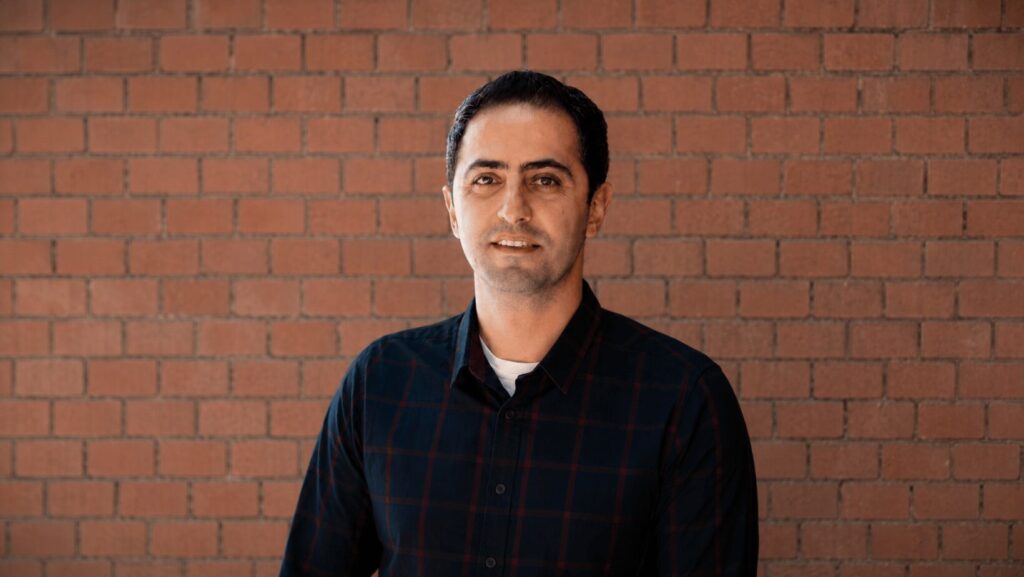
Amin Yazdani is the CEO and Co-Founder of Craver, a mobile ordering and loyalty platform built specifically for independent coffee shops and quick-service restaurants. Before starting Craver, he spent years in software and product development, working closely with small business owners, gaining an understanding of exactly where the technology available to them fell short. He started Craver because he believed local operators deserved the same tools the big chains had built for themselves, without the complexity, the cost, or the trade-offs. Today, Craver powers custom-branded apps for 2,500 merchants and has processed more than 13 million orders.
Why should coffee shops use an online ordering app?
A custom-branded app lets you own the customer relationship. The problem with DoorDash or Uber Eats is that every time a guest orders, that relationship belongs to the platform, not to you. They control what the customer sees next, what promotions reach them, and whether they ever come back to your coffee shop specifically. You’re essentially paying 20-30% per order to build someone else’s audience.
An online ordering app changes that dynamic entirely. Your customers are yours. You know who they are, how often they visit, what they order, and when they’re starting to drift. That’s not just a marketing advantage – it’s the foundation for everything else: Loyalty programs that actually work, promotions that reach the right people at the right time, and a direct line to your best customers that no algorithm can cut off.
What are the key features that boost coffee shop revenue & customer loyalty?
The features that move the needle depend on where your business actually is. If you’re just starting out, don’t try to launch everything at once.
For most independent coffee shops, the starting point is a points-based loyalty program, not a stamp card, because the reward feels too far away to motivate a second visit. Points start accumulating from the first order, and that immediate sense of progress is what turns a one-time visitor into a regular. Get this right before you build anything else on top of it.
Once you have a loyal base, order ahead and order history become your most powerful retention tools. Letting a regular skip the line and reorder their usual in one tap isn’t just convenient – it turns a habit into a ritual. That’s a very hard thing for a competitor to break.
Push notifications are what most coffee shops underestimate. Social media posts get buried. A well-timed push notification lands on a lock screen – a slow Tuesday morning becomes a revenue opportunity with a single, targeted message to the right customers at the right time.
Subscriptions and refer-a-friend programs are worth adding, but only once the foundation is solid. Subscriptions give your most loyal customers VIP benefits while unlocking predictable recurring revenue for you. Refer-a-friend grows your base by bringing in new customers who already trust you because someone they know sent them.
Can independent coffee shops compete with big chains like Starbucks using a custom mobile app?
One of the most common reasons we hear from coffee shop owners looking for an app is “a Starbucks just opened next door.” It’s a real and immediate threat. Starbucks has brand recognition, deep pockets, and a loyalty program with tens of millions of active users.
But here’s what Starbucks can’t buy: The feeling of belonging somewhere.
A custom app gives independent coffee shops the same capabilities – order ahead, loyalty rewards, targeted offers, seamless mobile checkout – without surrendering what makes them worth choosing in the first place. The convenience gap that used to favor big chains is gone. An independent coffee shop with a branded app can meet every expectation a Starbucks customer has, and then offer something Starbucks structurally can’t: A genuine human connection, a community, a place that actually knows your name.
Why should a small coffee shop invest in its own mobile app instead of relying on third-party platforms?
Third-party platforms have their place – they’re good for discovery. If someone’s never heard of you, DoorDash or Uber Eats might be how they find you. But discovery and loyalty are two completely different problems, and third-party platforms are only built to solve one of them.
Every repeat order through a third-party platform is a missed opportunity. You’re paying 20-30% commission on a customer who already knows you, already likes you, and would have ordered directly if you’d given them a reason to.
A branded app changes the economics entirely. No commission, no fees, no hidden costs. But more importantly, it changes who owns the relationship. When a customer orders through your app, you know who they are. You can reward them, reach them directly, and keep them coming back without paying a platform for the privilege every single time.
The operational side is simpler than most coffee shop owners expect. If your app integrates with your POS, your menu and inventory sync automatically, so there’s no extra work to keep things current. Sending a push notification takes minutes. You don’t need technical knowledge or a developer. Once it’s set up, the day-to-day is minimal.
Third-party platforms will always have a role in bringing in new customers. But once someone orders from you for the first time, the smartest thing you can do is make sure the next order comes directly to you.
What’s the biggest challenge independent coffee shops face when it comes to keeping customers coming back?
The hardest problem in this business isn’t getting someone through the door for the first time – it’s getting them back a second and third time. Most people who visit once have a genuinely great experience but never return. Not because they didn’t enjoy it, but because there was nothing to pull them back.
That second visit is the critical one. It’s where a one-time guest becomes a regular, and where the habit starts to form. Without a mechanism to stay connected after that first visit, most coffee shops are essentially starting from scratch with every customer, every day.
A mobile app solves this by making the second visit feel like the obvious next step. A loyalty program gives first-time guests something to come back for before they’ve even left. A well-timed push notification keeps the coffee shop top of mind when the habit is still forming. And once a customer has ordered through the app a few times, reordering their usual order with one tap is easier than going anywhere else.
And that compounds over time. Rook Coffee saw repeat customers ordering 45% more often after introducing its Craver app, not because it changed its coffee, but because it gave its best customers a reason to keep coming back.
Why do guests abandon third-party apps like DoorDash in favor of a café’s branded app once they try it?
Guests who try a branded app quickly realize the experience is just simpler. There’s no scrolling past hundreds of other options, no marketplace clutter – just their favorite café, their usual order, and a checkout that takes seconds because their payment and preferences are already saved.
There’s also something most guests don’t realize until someone points it out: They’re often paying more on third-party platforms than they would if ordering directly. Cafés routinely mark up their prices to compensate for the 20-30% commission they’re charged on every order. Ordering through a branded app means paying the actual menu price – often a meaningful difference on something you’re buying every day.
A lot of people choose independent cafés precisely because they want to support a local business over a corporation. When they understand that a bigger cut of every order goes directly to the coffee shop through a branded app, switching feels like the right thing to do.
What kind of loyalty program works best for coffee shops to increase monthly revenue?
The best loyalty program is one that gives a first-time guest a reason to come back the moment they place their first order. That’s why a points-based program is the right starting point for most independent coffee shops.
Unlike a stamp card, where the reward feels distant until it’s nearly full, points start accumulating from the very first order. That immediate sense of progress is what turns a one-time visitor into someone who comes back to see what they’ve earned, until visiting becomes a habit.
Subscriptions and tiered programs are powerful, but they work best once a coffee shop already has an established base of regulars. Launching them too early means they land flat – there’s no community to elevate yet. For most coffee shops, the priority is driving those second and third visits first. Everything else gets easier once the habit is formed.
Do customers spend more when ordering ahead than exclusively in-store?
The short answer is yes – and the difference is bigger than most coffee shop owners expect. Rook Coffee’s repeat customers spend 3x more when ordering through their Craver app than they did ordering exclusively in-store.
The reason comes down to how people make decisions when there’s no queue behind them. In-store, customers feel the social pressure of the line – they know what they want before they reach the counter, they order it, and they move on. Mobile ordering removes that pressure entirely. Guests browse at their own pace, read the menu properly, and are far more likely to add a modifier, upgrade their size, or try something new.
The other factor is personalized recommendations at checkout. A busy barista rushing through a morning queue can’t stop to suggest an add-on to every customer – but an app can do it every single time, consistently and at scale. And when those recommendations are based on a customer’s actual order history, they don’t feel like upsells. They feel like good suggestions from somewhere that knows your tastes.
How does direct marketing through an app (like push notifications) compare to social media for driving repeat visits?
Social media is useful for awareness, but reach only matters if people can actually walk through your door. For a single-location coffee shop, most of the people who see a post will never visit.
Push notifications are fundamentally different. A well-timed message lands on a customer’s lock screen. That’s a different level of attention than a social media post buried in a feed. And unlike social media, you choose exactly when they see it. A slow Tuesday morning becomes a revenue opportunity the moment you send the right offer to the right people.
The difference is that app marketing is based on real customer behavior. You’re not broadcasting to a general audience and hoping it lands; you’re reaching a customer who visited two weeks ago and hasn’t been back, or someone who’s one order away from a reward, or a regular whose visit frequency has started to drop.
It’s a completely different tool from social media. Social media is for reach, and direct marketing is for retention.
What roles do data and customer insights play in helping a coffee shop owner make smarter business decisions?
Most independent coffee shop owners make decisions based on gut feel. Not because they’re not smart, but because they’ve never had anything better to work with. A POS report tells you what sold. It doesn’t tell you who bought it, how often that person comes back, or whether they’re starting to drift away.
App data changes that. Instead of guessing when to run a promotion, you can see exactly which customers haven’t visited in two weeks and send a targeted offer specifically to them. Instead of wondering who your best customers are, you can identify your most frequent guests and make sure those people feel recognized before they start feeling taken for granted.
With a loyalty program, you can see exactly which customers are one order away from a reward and nudge them over the line before they lose momentum. That’s not something you can do with a stamp card or a social media post – it requires knowing who your customers are and where they are in their journey with you.
The shift when coffee shop owners start using their data properly changes how they think about their business – from managing transactions to building relationships. That’s a fundamentally different way to run a coffee shop, and it shows in the numbers.
What advice would you give a coffee shop owner thinking about getting an app for the first time?
A mobile app works best for coffee shops that already have guests coming through the door and want to turn those visits into a habit. If you have a steady stream of customers but feel like you’re not seeing them as often as you’d like, an app gives you the tools to change that.
It’s also the right move for coffee shops that are serious about competing long-term. Customers are being trained by Starbucks and other chains to expect a seamless mobile experience. An app lets you meet that expectation on your own terms, without giving up what makes you unique.
That said, an app isn’t the right move for everyone. If you’re a pop-up, a seasonal market stall, or a coffee shop that’s still finding its footing with foot traffic, an app won’t solve those foundational challenges. It amplifies the relationship you already have with your customers – it doesn’t create one from scratch.
But if you have a permanent location, a consistent customer base, and ambitions to grow, stop thinking of an app as a nice-to-have. It’s the infrastructure that makes everything else work: Loyalty, retention, direct ordering, and data. The coffee shops that build that foundation now are the ones that will be hardest to compete with in five years.
What’s a real success story from an independent coffee shop that transformed its business after getting a Craver app?
Rook Coffee is a good place to start because they came to us with a problem we hear a lot.
Founded in 2010 by childhood friends Holly and Shawn, Rook had grown to eleven locations on the back of a simple mission: Quality coffee and genuine human connection. They were good at what they did. But by the time they found Craver, their in-store ordering and payment process had become a bottleneck – slowing down the long lines they consistently had at peak hours and undermining the customer experience they’d spent years building. As their Director of Brand Strategy put it, they were excellent at brewing coffee quickly but kept losing time at the payment phase.
The operational impact was immediate. Staff who had been tied to the register during peak hours were redeployed to order fulfillment and customer service – the parts of the experience that actually reinforce what Rook was built on. The app also unlocked incremental sales that the in-store layout had previously made difficult, like bottled drinks and order customizations that customers hadn’t been asking for at the counter.
Today, 60% of Rook’s total orders come through Craver. That’s what happens when you remove the friction between a customer and the thing they already want.
How do you prioritize what features to build next, and how much does customer feedback directly shape the roadmap?
Customer feedback is one of the most important inputs we have, but it’s not the only one. The customers who ask for features loudly aren’t always representative of what most coffee shops actually need, so we spend just as much time watching how merchants use the product as we do listening to what they ask for.
Almost every merchant we work with is wearing many different hats – they’re the owner, the barista, the bookkeeper, and the marketer. Very few have the time to log in and set up a campaign, even if they know it would help. Nobody was asking us to fix that directly, but the pattern was impossible to ignore.
So instead of building more marketing tools that require merchants to do more, we started experimenting with automated campaigns that bring customers back with zero effort from the coffee shop owner. That came entirely from observation, not from a feature request.
That’s really how we think about the roadmap. Customer feedback tells us where the friction is, but what merchants ask for is often a symptom. Our job is figuring out what’s actually causing it – and building for that.