In 2026, the number of businesses falling victim to fraudulent refunds is at an all-time high.
More and more customers have been disputing totally legitimate transactions in hopes of getting their products for free, a phenomenon Chargebacks911 has termed “friendly fraud” — and the foodservice industry is no exception.
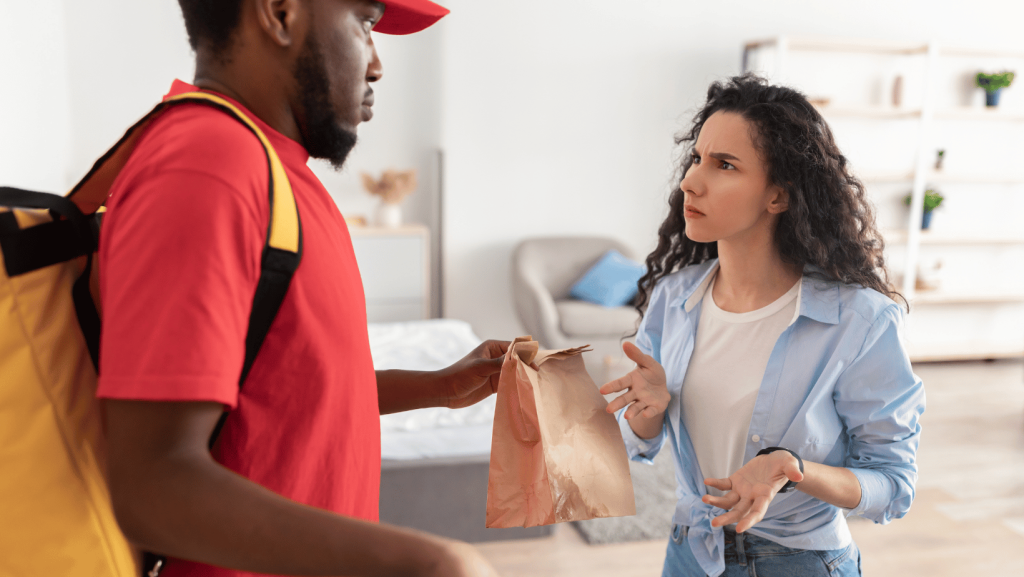
Recently, customers have taken friendly fraud to the next level, skipping the chargeback process and going straight to the merchant to demand illegitimate refunds. This is called refund abuse, a trend hitting delivery apps particularly hard in recent years.
Unsurprisingly, owners and operators are worried about the impact it’ll have on their businesses… but, like most things, the more you know about what’s going on (and why it’s happening), the better prepared you’ll be to put up barriers and respond accordingly.
So, let’s start at square one with a definition, shall we?
What is Delivery App Refund Abuse?
While friendly fraud is a more all-encompassing term referring to illegitimate chargebacks, delivery app refund abuse is a more specific challenge.
With refund abuse, customers try to manipulate the (often generous) refund policies of the companies they’re purchasing from, working around the refund guidelines and attempting to get exceptions made for their unique circumstances.
This usually happens directly with customer service on third-party delivery apps like DoorDash or Uber Eats — and it also typically comes with a falsified reason for why they need a refund, like:
- A hygiene issue (like a hair in the food)
- A successfully delivered order never arrived
- They didn’t place the order/it was fraudulent
- A paid-for item was made incorrectly or missing
Then, the customer requests a full refund from the third-party delivery app for a falsified reason… and they usually get it.

Should Restaurants Be Worried About Refund Abuse?
You don’t need to be worried, but you do need to be aware, because refund abuse is happening more and more frequently these days.
In a recent survey, ~84% of merchants reported that instances of friendly fraud had increased in 2026, with “illegitimate dispute losses” representing around half of all chargebacks. What’s more, ~62% of merchants have said that refund abuse is a “moderate” or “significant” concern for them, a stressor that only gets worse when you factor in the cost of refunds.
According to a LexisNexis Risk Solutions report from last year, every $1 of fraud actually costs US merchants an average of $4.61, putting the fraud premium for merchants 361% higher than the purchase price.
The cost of fraud goes beyond money, too.
- It costs you attention that could be spent focusing on genuine customers and creating a top-tier experience for them
- It costs you time waiting for refund requests to be addressed and actioned, especially if they’re being handled through a third party
- And it can cost you your reputation, particularly if the refunds are accompanied by reviews explaining what happened to their order (even if it isn’t true)
So yes, restaurants do need to be aware of refund abuse — and we’ll break down how it typically happens in the next few sections.
How Does Delivery App Refund Abuse Happen?
There are two main reasons that we’re seeing a rise in delivery app refund abuse: it’s easy to do, and the way delivery apps are designed sets things up perfectly.
Reason 1: Delivery App Refund Abuse Is Easy
According to a report by ITech Digital, the restaurant industry has seen chargebacks increase by 14% in the past five years alone, a number that disproportionately affects quick-service restaurants in particular. What’s more, estimates suggest that restaurants lose $1.8 billion annually thanks to the increasing rate of fraudulent food delivery refunds.
So, why has this been happening so often for so long?
Simple: delivery app refund abuse has a ridiculously low barrier to entry. All you need to “succeed” at delivery app refund abuse is an app, a credit card, and a lie… and data suggests that people have figured this “secret” out.
A 2026 report from the Merchant Risk Council found that 77% of merchants blame the increase in delivery fraud not on poor security measures or riskier sales channels, but on the fact that customers are figuring out how to “game the system.” Combine that with how fast it is to file a payment dispute with the bank, and delivery app refund abuse is simply too easy.
Reason 2: Delivery Apps Encourage Refund Abuse
The massive discrepancy between chargeback ratios leads us to the second reason behind increased refund abuse: the apps control the refunds.
When angry, upset, or disappointed customers reach out and complain about their food deliveries, the restaurant doesn’t get the brunt of it — the app’s customer service team does. Since complaints pose obvious risks to the app’s reputation, it’s not surprising that DoorDash and Uber Eats are quick to pull the “refund” trigger in the name of customer satisfaction.
However, where things do get surprising is in the refund processing stage. While the delivery app is responsible for managing refund requests and approving them… the restaurant is the one responsible for paying out those app-approved refunds.
Take DoorDash, for example.
Their article on error charges explains that “DoorDash issues a refund and/or credit” on behalf of the restaurant, but, “[depending] on the situation, [the restaurant] may be charged a partial or full fee to cover the cost.”
Then, when it comes time to pay those error charges, they’re “deducted directly from merchant payouts,” ranging from “25% to 100% of the applicable item costs, including tax, and subtracting commission paid.”
Ultimately, delivery app refund abuse is about gaming the system, effectively weaponizing the “customer-first” mentality that many restaurants and third-party apps pride themselves on.
And, considering how easy it is to abuse refunds, it’s a concern that every restaurateur should have on their radar.
Why You Should Care: A Case Study in Delivery App Refund Abuse
Spoon by H is a Korean restaurant in L.A., owned and operated by chef Yoonjin Hwang.
Or at least it was; Spoon by H shut its doors for good in 2021, citing “fraudulent orders and chargebacks” as the main reason for its closure.
Hwang said the “false charges” had been happening for a year, starting with credit card chargebacks and expanding to third-party apps. Regardless of the platform, Hwang got the short end of the stick either way. Not only was she responsible for footing the refund bills from third-party apps, but she also lost valuable time in the kitchen, spending time trying to resolve chargeback and app disputes instead.
In a now-private series of Instagram posts, Spoon by H shared the following statement about the restaurant closure:
“We are heartbroken to find ourselves sharing the very news we hoped we would never have to share… Spoon by H will be closing. Although we put up our very best fight, we could no longer hold out against the growing barrage of fraudulent disputed charges and the countless refunds issued.”
How You Can Combat Delivery App Refund Abuse
There are three main ways you can combat the rise of delivery app refund abuse: stop using delivery apps, start using a Craver app, or create your own from-scratch delivery app.
Option 1: Stop using delivery apps entirely
One way to combat delivery app refund abuse is to stop using delivery apps entirely. Although this isn’t the most ideal solution — apps offer huge potential for revenue generation — it’s the only sure-fire way to avoid refund abuse through delivery apps.
Option 2: Use your own Craver app for delivery
Another way to combat delivery app refund abuse is to use your own restaurant app with Craver. Depending on the level of control you want to have over your restaurant’s delivery services, using a Craver app for delivery can look like two different things.
- Use the Craver app and manage the delivery process on your own
If you don’t want to integrate your Craver app with third-party delivery apps, no worries — you can still offer delivery services in a way that works for you! Whether you’re hiring additional staff to manage the deliveries or delegating existing staff to delivery duties, you have control over refunds and the rest of the delivery process, too.
- Use the Craver app, but use third-party apps for delivery
Using Craver’s Uber Eats and DoorDash app integrations, you can lean on the third-party apps’ fleet of delivery drivers without having to hire your own or ask your staff to deliver. And, because orders come through your Craver app instead of Uber Eats or DoorDash, you get total control over your refund policy and process.
Option 3: Build and use your own delivery app
Our third (and final) suggestion for combating delivery app refund abuse is to take things entirely into your own hands with your own, custom-built app.
This option is definitely more expensive than staying on the third-party apps or using an app with Craver, but it gives you total control over the entire delivery process from beginning to end.
You get to decide how you accept delivery orders, whether online, through a mobile app, or a combination of both.
You get to organize your delivery process, whether you outsource delivery to DoorDash drivers or hire your own delivery fleet.
And you get to control the refund process, deciding what is (or isn’t) eligible for a refund, how you process them, and how frequently you accept them.
Again, a from-scratch custom app won’t be the fastest or cheapest option to handle delivery, but it will give you the most control over the entire app process — including delivery.
Delivery App Exit Strategy Guide
Tired of losing money to “missing” orders or “undelivered” food that you know actually went out the door? We put together this Delivery App Exit Strategy Guide to help you take back control.
Inside you’ll find:
- A breakdown of how much delivery apps are costing your restaurant,
- Two specific strategies to transition away from delivery apps by using flat-rate driver networks or managing delivery in-house, and
- Actionable tips to turn third-party app users into direct customers using delivery bag incentives, Google Business optimization, and exclusive loyalty perks.
FAQs
Yes. Delivery app refund abuse can cost your business time, money, and your reputation. It’s worth understanding how it happens, what the risks are, and what your options are to prevent it.
What can I do to prevent delivery app abuse?
You can stop using third-party delivery apps, use your own Craver app for delivery, or build and use your own delivery app from scratch.