Every coffee shop is unique, built on individual stories and one-of-a-kind offerings.
Yet, no matter how different coffee shops are from each other, they all have one thing in common:
They’re businesses that need the same foundational elements to survive and thrive.
In this blog, we’re breaking down the top 10 business essentials all coffee shops need to succeed, from managing startup costs and exploring a coffee shop app to figuring out must-have equipment and implementing barista training.
Use this checklist to make sure you’re hitting all the coffee shop must-haves you need to keep up with the big brands — and come out on top.
Let’s get started!

1. A Clear Coffee Shop Business Plan and Concept
A coffee shop business plan and concept are essential for success because they outline exactly what success looks like and how you’ll get there.
Business plans and concepts will look different from coffee shop to coffee shop, but they should all include a few key sections that’ll help you cover your bases, like an executive summary, mission/vision/values, market analysis, menu and services (among others). Think of it as a comprehensive guide on what you do, who you do it for, and how you make it happen.
A detailed business plan gives your coffee shop a go-to document to check on your progress, guide difficult decisions, and get ahead of common challenges. Plus, it’s a super handy tool for investors and partners!
One step you can take today → Write down a basic one-page plan. Make note of your audience, your offer(s), and a few measurable goals that you expand on when you go to write your actual business plan.
2. A Realistic Startup Budget and Cash Flow Plan
Nobody really loves to talk about money, but a business can’t last without a plan to make money!
If you’re a new coffee shop owner working on your first budget and cash flow plan, pay extra close attention to your coffee shop’s startup costs. You’ll need to invest in more than you think before you can open your doors, from coffee shop equipment to skilled staff members that’ll run things day to day.
Other parts of budgeting and cash flow apply equally to new and seasoned coffee shops. Ongoing rent, labor, ingredients, utilities, software, maintenance… businesses of all sizes will need to plan for these costs and factor them into their yearly budgets. You’ll also want to pay special attention to the profitability side of things, making sure your coffee shop profit margins are strong and sustainable.
One step you can take today → Refresh your financial and budgeting knowledge by reviewing our Guide to Profitability. We go through everything from defining “revenue” and “cash flow” to identifying common mistakes you’ll want to look out for.
3. A Suitable Location and Efficient Shop Layout
Choosing a coffee shop location is a strategic process.
Your location should balance three things: how much space you’ll need (or want), whether the location is a good spot for food traffic, and whether commercial space in your ideal neighborhood is easy to find and within your budget. Finding a spot that checks all the boxes may take time, so don’t get discouraged if the first location you see isn’t perfect.
The same strategic thinking applies to your coffee shop’s layout, too. Your coffee shop should create an easy flow throughout the space, with enough space for lines to form, customers to dine in, and your staff to move around. Don’t forget about legal accessibility requirements, too!
One step you can take today → Visit your favorite coffee shop and observe how they’ve organized their space. What routes do staff take through the store? How is the front counter situated? Is their layout easy to access and welcoming? Note what you like (and what you don’t).
4. Required Permits and Food Safety Procedures
Before opening your doors, your coffee shop needs the necessary permits and food safety procedures in place.
For permits, you’ll need things like an Employer Identification Number (federal level), a food service license (state or local level), and a permit issued by your health department (local/county level), among others. It’s a good idea to consult a lawyer at this stage to ensure you don’t miss any requirements that could prevent you from opening.
You also need to establish your food safety procedures, covering everything from safe storage and cleaning schedules to food handling. Every staff member should understand the level of safety and hygiene required, and be confident reaching it every single day.
One step you can take today → Pick one permit to start with and call the appropriate department and ask what you need to get started. Put time on your calendar to collect the right documentation, and cross one permit off your list at a time!
5. Reliable Coffee Shop Equipment and Maintenance
To run a coffee shop, you need equipment to actually make the coffee you’re going to sell, right?
You’ll need to source and purchase a couple of non-negotiable pieces of coffee shop equipment: an espresso machine, a grinder, a brewer for drip coffee, proper refrigeration for milk, and smallwares like cups, saucers, and takeout packaging. Depending on how busy your coffee shop is, you may end up wanting a second espresso machine or a bigger grinder, but start with just the essentials for now.
It’s also important to set up a maintenance schedule. Regularly cleaning your equipment not only helps it last longer, but also ensures the product you’re putting out is consistently high quality, so set a schedule for maintenance and deep cleaning.
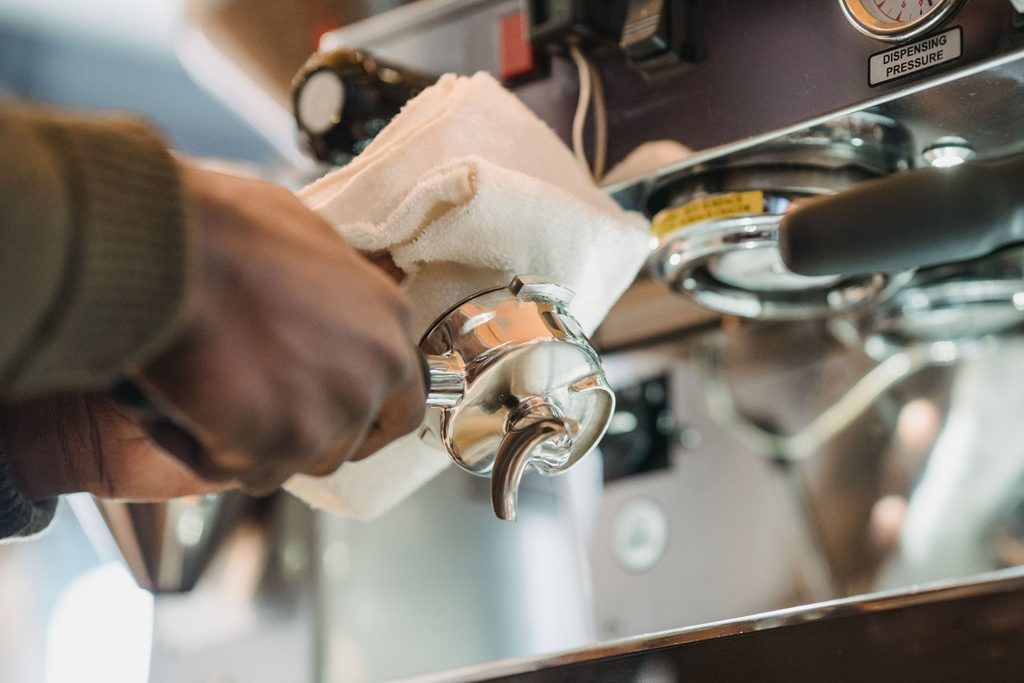
One step you can take today → Start researching just one piece of equipment. Which brand do you like? What’s in your budget? Where can you buy it? How long does it take to arrive? Do your research ahead of time, so you’re ready to purchase when the time comes.
6. Quality Ingredients and Dependable Suppliers
Right after equipment comes the supplies to make delicious coffees and speciality drinks.
Coffee beans, milk, and dairy alternatives are the obvious ingredient purchases, but there are extras to consider, too. Will you be purchasing coffee syrups to make speciality beverages? What about matcha, tea, or non-coffee drinks? Are you going to make your food items yourself, or source them from another restaurant or bakery?
All these decisions (and especially that last one) all boil down to finding dependable suppliers. You want suppliers that ensure quality, have consistent and reliable delivery schedules, and offer a backup option in case things go wrong.
Don’t forget: you’ll also need to figure out a way to track inventory and reduce waste as new products with different shelf lives come in.
One step you can take today → Look into making things easier with your own inventory management. Explore different options like Craver’s Square POS integration, Toast’s add-on inventory management services, or something external like MarginEdge.
7. A Focused Coffee Shop Menu With Sustainable Pricing
A manageable coffee shop menu balances guest demand, preparation time, ingredient overlap, and profitability.
As you’re creating or updating your coffee shop menu, it can be helpful to explore the food cost formula to see your food cost percentage for every menu item (and make sure it’s high enough). Most coffee shops aim for a food cost percentage of 15-25% per item, but you can make adjustments as you see fit.
It’s also important at this stage to intentionally remove complexity from your menu wherever you can. It’s easy to fall into the “more is more” trap, especially when you see brands like Starbucks coming out with complicated new drinks every other day, but a focused menu is a strong menu.
One step you can take today → Carve out some time to learn about menu engineering, the science of boosting sales without necessarily raising your menu prices. This is a good way to balance profitability and item popularity for a sustainable menu model.
8. Trained Baristas and Consistent Daily Routines
You know how to run your coffee shop — but your staff and baristas should know how to run it just as well.
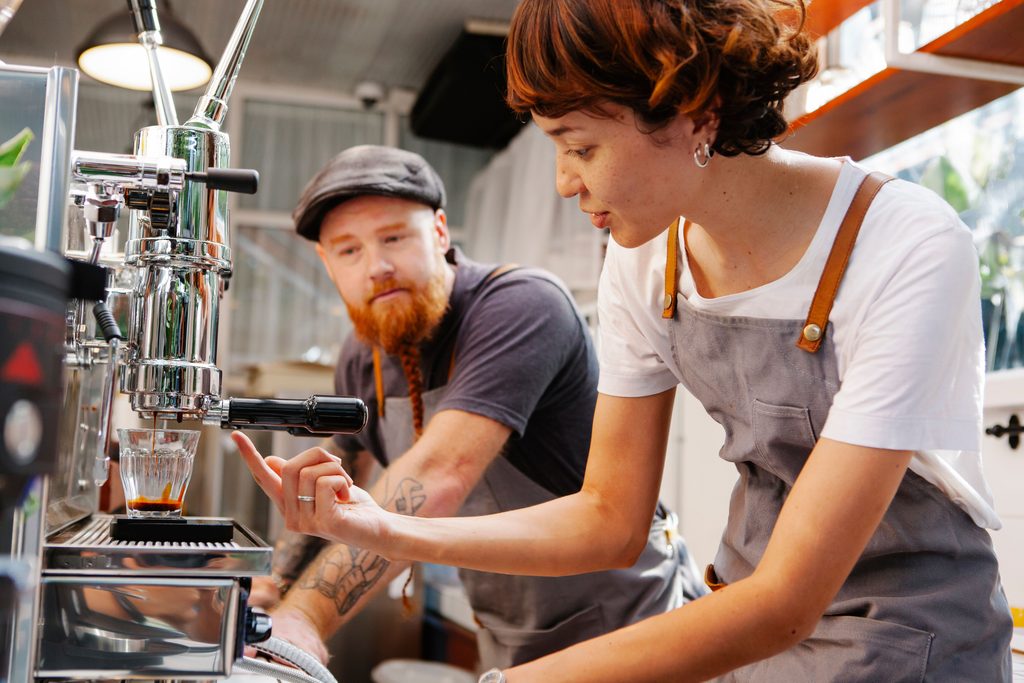
Once you interview and hire your A-team of baristas (which is super easy to prep for if you use our interviewing guide!), it’s time to launch into barista training. Recipe standards and consistency, opening and closing checklists, and committing to friendly, high-quality service should all be covered in your barista training to ensure a good customer experience, every time.
Routine documentation is important here too. Document any repeatable workflows and recipes in an easy-to-access spot in case current baristas need a reminder (and to make training future baristas easier).
One step you can take today → Do some market research by poking through recent barista job openings. What part of other brands’ barista job descriptions do you like? What’s missing that you’d want to add? Where can you stand out or offer something unique?
9. A Coffee Shop POS System and Convenient Ordering Options
The right point of sale (POS) system goes far beyond a digital cash register replacement.
A coffee shop POS system can streamline operations and order management, make inventory management easier and more accurate, and eliminate manual order taking (and the errors that often come with it). Plus, POS integrations make connecting your other systems easier too.
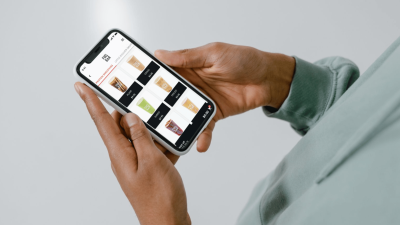
If you want to take customer convenience to the next level, a coffee shop app (like with Craver) can get you there. A branded app opens up a whole new world of convenience-based features, like ordering ahead, one-tap reordering, and saved payment, among others.
And remember: an app doesn’t have to be your first investment! Just keep the benefits in mind as you and your customer base grow.
One step you can take today → Try a few app demos to see which interface you like best. Craver, for example, has a free online demo tool through iPhone’s App Store where you can test out the ordering process and see what the customer experience is like.
10. Marketing and A Coffee Shop Loyalty Program That Encourage Repeat Visits
People won’t come to your coffee shop if they don’t know your coffee shop exists in the first place. That’s where marketing comes in.
There are virtually endless ways to market your coffee shop. You can post on social media platforms like Instagram. You can work on updating (and optimizing) your Google Business Profile. You can use email and SMS marketing. Or ideally, a combination of all three!
Then, once you get that new customer’s attention, you can use a coffee shop loyalty program to nurture that relationship and keep them coming back. As you’re setting up or updating your coffee shop loyalty program (which we talk more about in this loyalty guide), make sure that your offers work for your customers and your bottom line.
One step you can take today → Use our Coffee Shop Loyalty Program ROI Calculator to figure out what your ideal loyalty program looks like, both in cost and in earnings.
FAQs
Your #1 investment priority depends on your specific goals, budget, and day-to-day requirements. If you’ve just opened your doors, then investing in coffee shop equipment first could make sense. If you’re a more seasoned business, your next investment might be a better POS system or an inventory management tool. Always map out your options against your business plan and available budget before committing.
A small coffee shop doesn’t need an app, but it can be good for business to have one. Coffee shop apps can transform your customer experience, making it easy to order ahead and build loyalty. But before fully jumping into a coffee shop app, consider whether your customer base would respond well to it, whether your existing technology and POS are compatible with it, and the budget you have available for one.
Regularly tracking specific metrics can help you see whether your coffee shop is improving. For example, you can track sales and cash flow to see whether sales are improving, ingredient waste to see whether you’re handling inventory management better, and average order value to evaluate whether your promotions are effective. Revisit your metrics at least monthly for the best view of improvement.