Q1 2025 was named “one of the worst quarters” for quick-service restaurants in recent years.
Then, in September 2025, reports suggested that younger Americans are spending less and less at restaurants.
And, most recently, financial analysts reported in December 2025 that stocks are down for the top restaurants on the market.
With stats like those in mind, it’s obvious that restaurants have been handed more than their fair share of earning obstacles in 2025… and, unfortunately, no operation is immune.
(A few weeks ago, industry moguls like Jack in the Box reported “the worst sales quarter in years” — because industry challenges of this caliber don’t discriminate.)
So, how has the industry responded to this year’s decline in traffic and spending?
“Value wars” — an unspoken competition between restaurants to see who can create the best bang-for-your-buck value offerings, ultimately winning over the hearts (and dollars) of value-conscious consumers.
But, while value wars may have been the hottest strategy of the summer, it’s not without its faults.
One of the greatest critiques of value wars as a strategy is its short-sightedness. It focuses too heavily on increasing revenue right now, raising questions about whether the industry can sustain this push for value and lower pricing in the long run.
Luckily, there is an alternative strategy – one that’s far more sustainable, forward-thinking, and suited for the long-term compared to its value wars counterpart:
The inverted marketing funnel strategy.
What is The Inverted Marketing Funnel Strategy for Restaurants?
Before we explain the inverted marketing funnel strategy, let’s do a quick refresher on the traditional one.
In a traditional marketing funnel strategy, your restaurant focuses its efforts from broad to narrow. That is, you’d work on generating awareness and interest from a wide audience first, then narrow your efforts to convert a specific type of prospect into a customer.
Here’s what the traditional marketing funnel strategy looks like in restaurants:
1. Awareness
Generate awareness of your restaurant with a broad audience of your ideal consumers (i.e. prospects).
2. Consideration
Show your prospects what makes your restaurant stand out and why they should purchase from your business.
3. Conversion
Encourage prospects to become customers by inspiring confidence (i.e. good products, strong customer service, etc.)
4. Action
Foster loyalty with your newly-acquired customers through sustained engagement, marketing, and rewards.
Now, the inverted marketing funnel strategy is similar to the traditional marketing funnel strategy except that it’s… well… inverted.
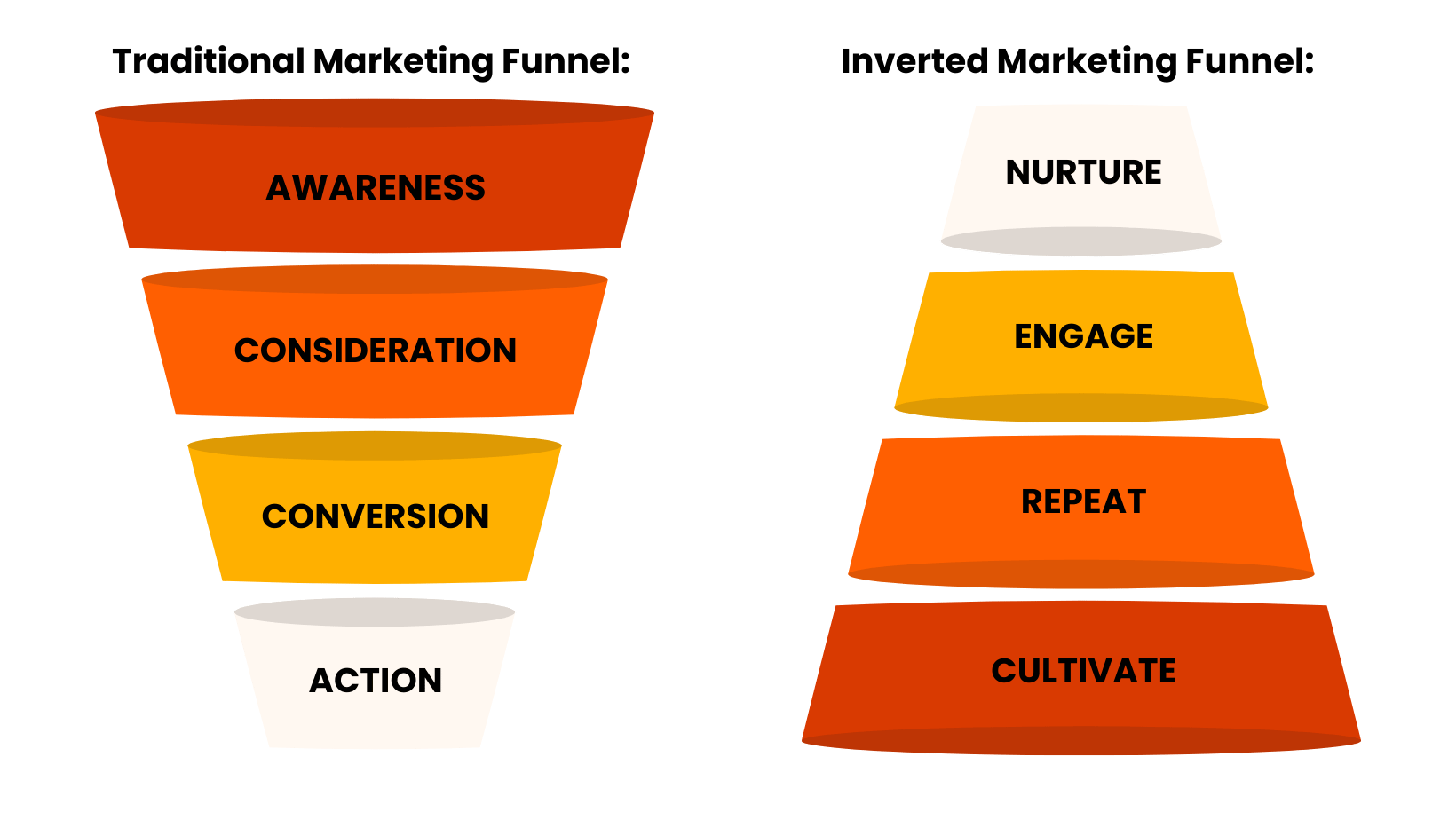
So, instead of starting with a broad, more general audience and narrowing it down to convert a select few later (like the traditional marketing funnel strategy), you put all your efforts into focusing on your current guests. By amplifying and improving the experience of existing guests, you’re working to solidify yourself as a staple in their “loyalty roster,” keeping them coming back and encouraging them to spread the word (A.K.A. recruiting new guests for you).
Here’s what the inverted marketing funnel strategy looks like in restaurants:
1. Nurture
Focus on nurturing your relationship with the guests you already have, making sure every experience they have with you is top-shelf and memorable.
2. Engage
Create a customer experience that’s not only good but meaningful and engaging, too. Personalized messaging and innovative technology can help!
3. Repeat
Commit to offering such a consistently strong customer experience that your guests don’t think twice before coming back again (and again and again).
4. Cultivate
Your happiest guests are also your restaurant’s best advocates, cultivating more interest through word-of-mouth and personal advocacy.
3 Reasons Your Restaurant Should Use an Inverted Marketing Funnel Strategy
Now that you know what the inverted marketing funnel strategy actually is, you’re probably wondering what the benefits are (and why it’s better than jumping on the value wars train).
There are three main reasons the inverted funnel is a better restaurant marketing strategy than value wars.
1. It Creates Long-term Loyalty From Your Restaurant’s Customers
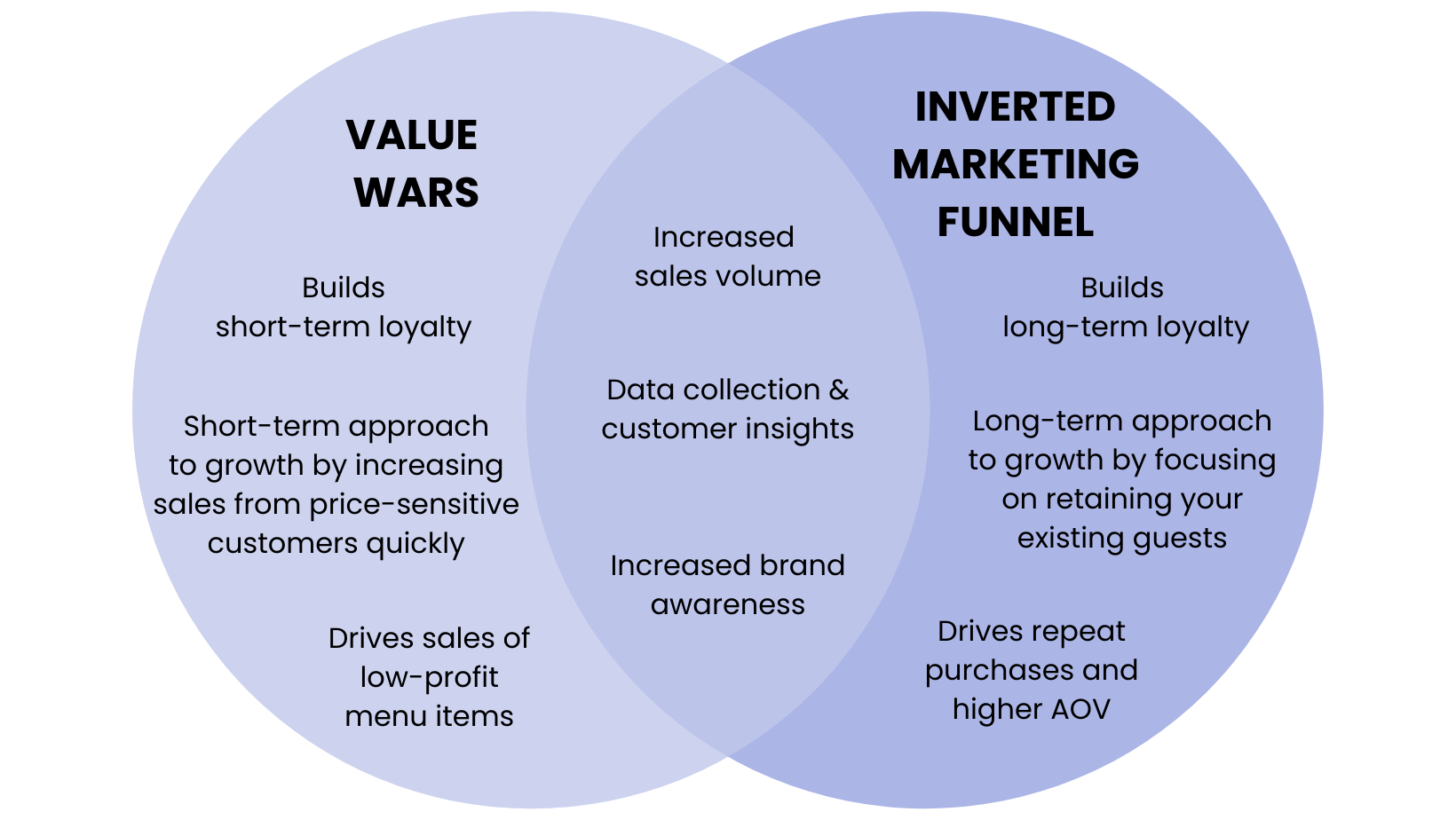
As mentioned earlier in this blog, one of the main issues with the value wars strategy is that it focuses too much on the short-term. By creating limited-time value-driven offers to get a leg up on the competition, you’re only attracting guests to that specific offer; once it’s over, they have no reason to stay loyal to your restaurant.
On the other hand, the inverted marketing funnel strategy focuses on creating and fostering real, long-term relationships with your restaurant’s customers. By choosing this strategy, you’ll ensure customers are genuinely invested in you and your restaurant, so they’ll stick around regardless of whether a specific value meal comes or goes.
2. It Grows Your Restaurant’s Margins (Instead of Eating Into Them)
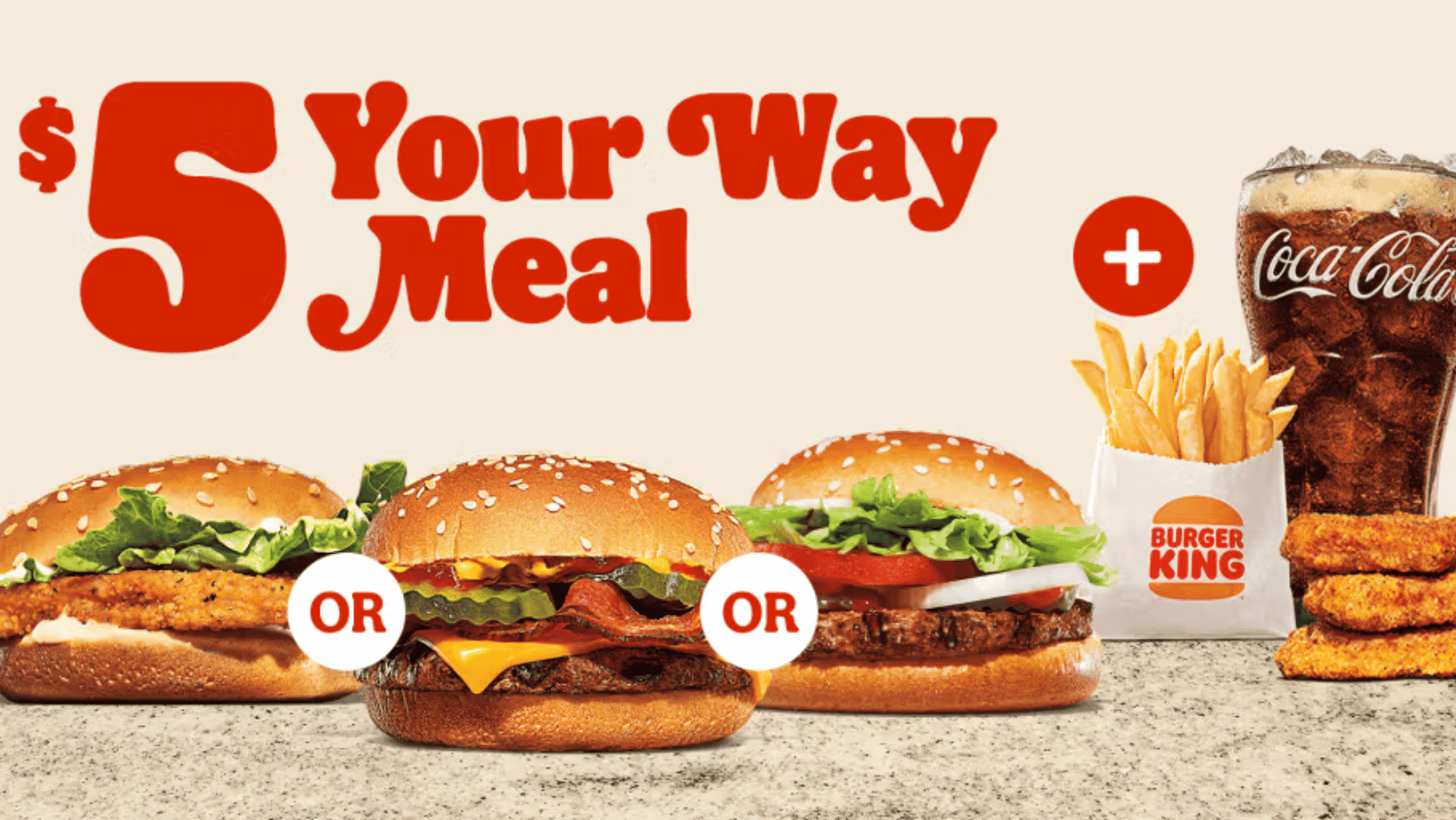
Another issue with the value wars strategy is that, while it’s intended to beef up your restaurant’s profit margins in the short term, it doesn’t always help them in the long term. Keeping up with aggressive discounts through value meals isn’t often sustainable, especially if the sales from those meals don’t cover the cost of ingredients, labor, and operations required to make them.
In contrast, the inverted marketing funnel strategy can grow your restaurant’s profit margins instead of eating into them in two main ways. First, it doesn’t require you to offer (and maintain) aggressive discounts, so you’re not decreasing or losing profits. Second, it focuses on building customer loyalty through tools like a restaurant online ordering system, a proven strategy for increasing repeat visits and higher average order values.
 Source: Burger King
3. It Offers a More Sustainable Approach to Long-term Growth
Finally, the last issue with the value wars strategy is its potential to harm your restaurant’s margins. Think about it this way: value wars are used to amp up sales, and amp them up fast. And, because of that pressure to improve sales, it’s easy to overlook the impact sustaining these discounts will have on your margins.
With the inverted marketing funnel strategy, you’re not under pressure to implement impossible-to-maintain discounts. Sure, you might want to offer your most loyal customers deals or savings, but that can be done far more sustainably than when you’re scrambling to keep up with the (restaurant industry) Joneses.
Make Loyalty The Core of Your Restaurant Marketing Strategy with Craver
Ready to give the inverted funnel marketing strategy a shot?
You’ll need to prep your restaurant with the right relationship-building infrastructure, first…
And that’s where we come in. With Craver’s range of restaurant tech solutions, implementing the inverted funnel marketing strategy is as easy as pie (and who doesn’t love pie?).
- Foster long-term loyalty with your regulars by offering a top-tier restaurant loyalty program, hosted on your very own custom-branded mobile app
- Take your customer experience to the next level by launching a customizable Membership & Subscription program for your restaurant
- Create deeper connections with your guests through personalized in-app features like saved favorites, add-ons, and targeted push notifications
This article was written in collaboration with Deena McKinley.
Deena has over 20 years of experience working with leading QSR and Fast Casual brands, helping restaurants create data-driven marketing and digital strategies to increase customer engagement and improve financial performance.
As Chief Experience Officer for Papa Gino’s Pizzeria and D’Angelo Grilled Sandwiches, two iconic New England brands with a combined 150 locations in the Northeast, Deena oversaw the digital, strategic marketing, technology, catering, and guest experience teams, leading the digital transformation of these legacy brands through the implementation of a new online ordering platform, app, and loyalty experience.
Previously, Deena was Chief Experience Officer at Mobivity, providing multi-unit restaurants like Subway, Sonic, and Dairy Queen a platform to increase retention, guest engagement, frequency and spend. Deena was also Chief Client Officer at Zimmerman Advertising, working with restaurant clients such as Papa John’s Pizza, Boston Market, and Firehouse Subs.
Connect with Deena: