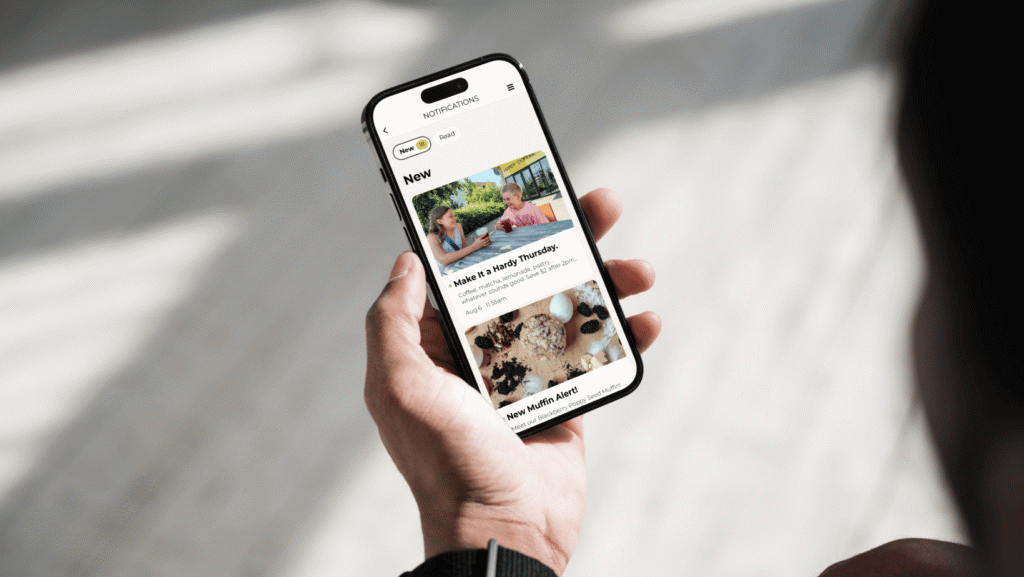
Push notifications — those little pop-ups your favorite app sends straight to your phone — are a great way to connect with customers, send deals, and keep your brand top of mind.
And they’re not limited to just retail, either.
Keep reading to find out why push notifications may be exactly what your coffee shop’s marketing strategy is missing.
Why Push Notifications Work For Coffee Shops (When Done Right)
Most retail environments rely on sporadic visits; people are just popping in as they’re already walking by, or simply window shopping before leaving empty-handed.
Coffee shops are a totally different environment. Their visits are frequent, habitual, and rooted in a sense of loyalty… which makes them perfect candidates to leverage app push notifications.
Coffee shop regulars already have an ordering habit
According to a 2025 Toast survey, 89% of people buy coffee out at least once a week, with 16% saying they buy coffee out every single morning.
That means you don’t need to use push notifications to convince already-engaged users to visit your coffee shop. You can use them to strategically reach users while they’re already carrying out their existing routine, finding ways to enhance their in-store experience instead of interrupting it.

Common mistakes to avoid
There are several common mistakes we see coffee shops make when they’re new to push notifications. Luckily, if you know what to look out for, they’re all 100% avoidable.
✘ Sending irrelevant blasts — The push notifications you send need to be relevant to the person receiving them. Irrelevant notifications not only make it seem like you’re not paying attention to your customer, but they also have a low chance of converting. Why would someone take action on something that doesn’t apply to them?
✘ Over-sending push notifications — Even your most loyal customers don’t want to hear from your coffee shop a million times a day. Sending too many push notifications is a good way to create annoyed users who don’t end up sticking around (but more on the ideal number of push notifications, later!).
✘ Forgetting about notification permission — Remember: just because a user has your app doesn’t mean they’ll turn on notification permission (and no permission = no notifications get through). Demonstrate value in the opt-in so customers are incentivized to turn on notification permission for your app, and keep it on long-term.
The real concern here is that, by making these mistakes, you risk a customer deleting your coffee shop’s app from their phone. So, keep your push notifications relevant. Don’t send too many. And deliver value from day 1, so your chances of staying downloaded remain high.
How Often Should a Coffee Shop Send Push Notifications?
Timing is a key part of any push notification marketing strategy, and it’s important to find a balance between staying relevant and not over-sending to your audience. You’ll typically see push notification frequency recommendations of 3-5 per week, but it’s not quite that simple.
While some audiences may respond well to receiving three or more push notifications a week, Business of Apps found that some customers will disable push notifications after receiving just one a week.
Ultimately, the only way to know how often your specific coffee shop should send push notifications is to watch opt-out rates. Do you see opt-outs surge after three push notifications? Maybe that’s too many for your specific audience. Do things start to stabilize at the 1-2 push notification mark? Maybe that’s your audience’s sweet spot. Test, look at the data, and adjust.
And remember: just because your app has engaged users doesn’t mean they want to be bombarded by 500 daily push notifications. Over-sending will lead to annoyed users.
The Best Time to Send Push Notifications to Customers
According to data by VWO Engage and Business of Apps, customers prefer to receive push notifications around working hours — early in the morning and after close of business. They also found that the highest click-through rates happened on Tuesdays and Sundays.
However, while these days and times are good starting points, only you know the ins and outs of your customer base.
If your coffee shop’s morning rush usually starts at 8 AM, try sending a push notification at 7:30 encouraging folks to “Beat the morning rush and order ahead.” Or, if you know that things pick up in July, send a few push notifications in June to generate summer-drink hype and get people excited about your cold drinks returning.
Pay attention to your customer’s behavior, experiment with which times work best, and go from there. And, when in doubt, follow this general push notification “schedule” to guide what times of day you might consider sending different types of content.
| Time of Day | Best for: |
| Morning | Important news and same-day promos |
| Afternoon | Reminders and post-lunch deals |
| Evening | Next-day teasers and daily recaps |
How To Write Push Notifications That Get Opened
If you want your app’s push notifications to get opened, you need to make sure you’re sending impactful, effective messages that land as soon as they reach the lock screen.
We recommend following this simple copywriting formula to help you write push notifications that actually get opened:
Offer + reason + single action
Example #1:
Get a free dessert on us to celebrate your birthday. Redeem now!
- Offer → free dessert
- Reason → for their birthday
- Single action → “Redeem now”
Example #2:
Free Coffee Friday starts now! Get your free coffee, in-app only.
- Offer → free coffee
- Reason → Free Coffee Friday promo
- Single action → “Get your free coffee”
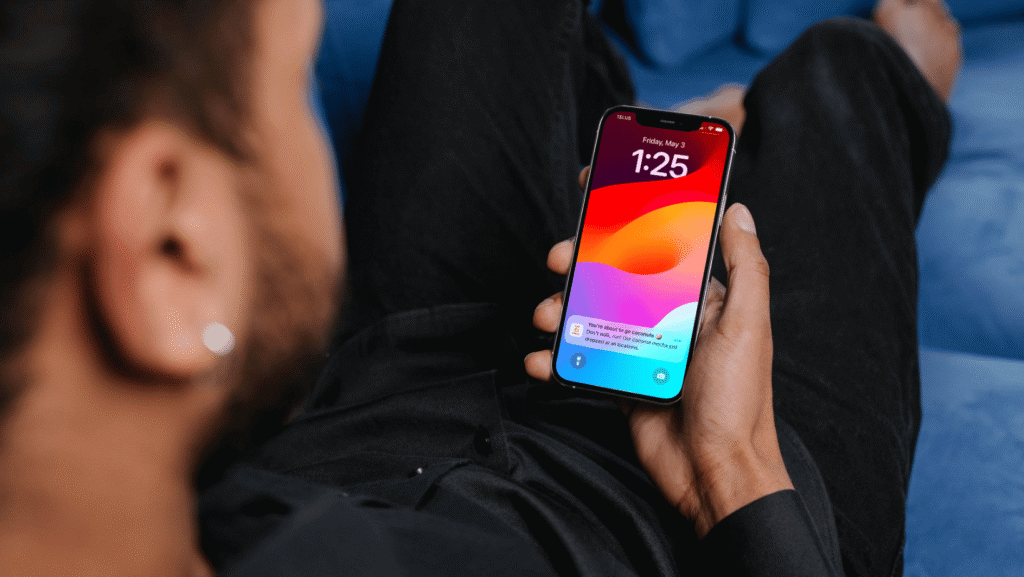
You can also include emojis, phrases of urgency (e.g., “Don’t wait!), and personalization by using the customer’s first name to make each push notification more tailored and exciting.
Measuring and Improving Your Strategy Over Time
There are three main metrics you can use to measure and improve your coffee shop’s push notification strategy.
- Open rate — This signals how many customers opened the notification. According to Customer.io push notification data, open rates tend to max out around 4%. While that’s relatively low for open rates overall, it’s not a huge problem for push notifications. People can absolutely take advantage of the notification without technically opening it!
- Click-through rate — This metric signals how many customers clicked on your push notification. Data by Pushwoosh suggests the average click-through rate for push notifications in the eCommerce/retail world is 3.05% on iOS, and 3.78% on Android. So, if your click-through rates are hovering between 3-4%, you’re on the right track.
- Opt-out rate — This metric is the percentage of customers who opted to stop receiving your coffee shop’s push notifications. While nobody loves seeing that a customer opted out, it’s a normal part of the push notification process! Use this data to explore what may have turned them off, and figure out how to do better with the next customer.
You can also take measurement and improvements to the next level with A/B testing. Try sending push notifications on different days, at different times, and with different frequencies to see what your customer base responds best to.
Then, adjust your strategy with this new data, and try again. Real customer data based on real user behavior is the best way to get real results.
FAQs
It depends on your specific audience. Most benchmarks suggest sending 3-5 push notifications per week, but for some audiences, that may be too many. The only way to know how many push notifications your specific coffee shop should send per week is to test a specific number, watch the opt-out rates, and adjust.
What’s a good push notification open rate for a coffee shop?
For coffee shops, a push notification open rate of ~4% is the typical benchmark, with Android devices in particular showing the strongest open rates. While at first glance, that number may seem low, remember that push notifications are unique in that they don’t technically have to be “opened” for people to take action!
What’s the best time for a cafe to send push notifications?
It depends on the content of the push notification! Early morning is the best time for important news and same-day prompts. Afternoon is the best time for reminders and post-lunch deals. Evening is the best time for next-day teasers and daily recaps.
Are push notifications better for coffee shops than SMS or email?
None are necessarily “better” than the others — they just have different purposes. Push notifications are best for instant, time-sensitive offers, and they’re typically free to send when you already have an app. SMS and email marketing suit longer, less frequent messages, and, depending on the size of your list, they may have additional costs to send.
How do I stop customers from turning off push notifications?
You make sure every in-app message is relevant, personalized, and high-value. A good way to ensure every push notification is relevant is to segment the messages by loyalty tier and order history, so you ensure the right message reaches the right person at the right time.
How do I measure if my push notifications are working?
You can use metrics like open rate, click-through rate, and opt-out rate to determine if your push notifications are working. For example, if you see rising open rates with a stable opt-out rate, it means your frequency and timing are successful. If you’re seeing more opt-outs than anything else, you may need to evaluate your segmentation or your content strategy.