Over the past few years, food delivery has skyrocketed in popularity, and 2026 shows no signs of slowing down.
The global food delivery market is expected to reach $1.54 trillion in valuein 2026, with North American diners contributing ~38% of that revenue last year alone. Apps like DoorDash and Uber Eats have long been the top choice for third-party food delivery services…
But are third-party options really the best choice for your restaurant? And what are the alternatives if you want to ditch third-party services?
In this blog, we’ll explore the benefits and costs of third-party food delivery services for your restaurant — and the #1 alternative you might want to consider, instead.
What are third-party food delivery services?
Third-party food delivery services are external platforms that help your restaurant with food delivery. These services typically manage every part of the restaurant delivery process, from ordering and payment to communications and actual delivery.
The benefits of third-party food delivery services for restaurants
There are a few major benefits to using third-party food delivery services, including:
- More exposure for your restaurant — Using third-party food delivery services can help more people discover your restaurant, including those who may not have found you otherwise.
- Convenient ordering for your guests — Third-party food delivery services offer your guests convenient ordering options, especially if they’re already familiar with using delivery apps.
- Quick launch process — It doesn’t take a lot of heavy lifting to get started with third-party food delivery services. Sign up, set up your menu, activate your account, and that’s it.
- More tools for marketing — Third-party food delivery services often have a range of options your restaurant can use for in-app marketing, like sponsored listings, paid ads, and promotions.
The cost of third-party food delivery services for restaurants
While there are benefits to using third-party food delivery services, all of them come at a cost to your restaurant — both literally and figuratively. Here are the biggest drawbacks to consider before jumping straight into a third-party app.
Commission fees
Commission fees are one of the highest costs of using third-party food delivery services. Each platform charges its own set commission fee, with some reaching up to 30% per order. So, for a $50 order, you could be losing up to $15 per order — and that’s excluding all the other fees.
Here are commission fees for the most popular third-party food delivery services.
| Platform | Commission Fees | Commission fees for a $50 order |
| UberEats | Up to 30% for delivery | Up to $15.00 |
| DoorDash | Up to 29% for delivery | Up to $14.50 |
| Grubhub | 10% for delivery | $5.00 for delivery |
Payment processing/service charges
On top of commission fees, third-party food delivery services also charge a payment processing fee (and/or service charges). At first, losing $1.83 per order doesn’t seem so bad. But, over time, that number adds up very quickly… and so do your lost profits.
Here are the payment processing/service fees for the most popular third-party food delivery services.
| Platform | Processing Fees | Processing fees for a $50 order |
| UberEats | 2.9% for Webshop, distance-based fee for Uber Direct | $1.45 (Webshop) |
| DoorDash | 2.9% + $0.30 for online ordering | $1.75 |
| Grubhub | 3.05% + $0.30 per transaction | $1.83 |
Marketing/promotion fees
To get your restaurant in front of more customers (and to keep pace with competitors), many third-party food delivery services offer marketing features like sponsored listings or promotional orders. It’s a nice option, but it does cut right into your profits.
Here are some marketing/promotion fees for the most popular third-party food delivery services.
| Platform | Marketing/Promotion Fees |
| UberEats | Variable — you set the budget for sponsored listings or paid ads |
| DoorDash | $0.99 per promotional order + the cost of any discounts |
| Grubhub | Up to 20% marketing fee |
Cancellation & penalty fees
For most third-party delivery services, cancellation and/or penalty fees are situation-dependent… but there are many circumstances in which UberEats, DoorDash, and Grubhub won’t pay you for a cancelled order, even if you’re not the one who cancels it.
And, even if you do get paid for a cancelled order, you could still get the short end of the stick. Over the past few years, refund abuse on third-party delivery services has been on the rise, which costs your restaurant both time and money.
Opportunity cost
One of the biggest lost opportunities with third-party delivery services is that you don’t have access to your customer data. If a customer orders from your restaurant on UberEats, DoorDash, or Grubhub, the platforms own the customer information, not your restaurant.
Without access to your customers’ demographics, order history, or reviews, your restaurant can’t make data-informed decisions like better promotions or stronger rewards — and that’s not good for you or your customers.
Example: $50 order fee calculation
Say you have a $50 order come in through UberEats, and you’re wondering what you’ll make after all the fees come out. Here’s what that breakdown looks like.
| Customer order total | $50.00 |
| Delivery fee | $15.00 (30% on the premium plan) |
| Payment processing fee | $1.45 (2.9%) |
| Promotion fee | $0.00 (you didn’t run any ads) |
| Cancellation fee | $0.00 (the delivery went smoothly!) |
| What you’ll get | $33.55 |
Losing $16.45 to non-negotiable fees is definitely not the most ideal situation. So what if you could keep the full $50.00 instead?
The #1 alternative to third-party food delivery services: custom-branded mobile apps
The #1 alternative for restaurants using third-party food delivery services is launching your own, first-party mobile app — one that lets you own the delivery process.
Using a first-party mobile app for food delivery has a ton of benefits that third-party food delivery services just can’t compete with, including:
- Lower delivery costs and no commission fees
- Full ownership over customer data, so you can actually use it to grow and improve
- Loyalty-building for your own restaurant, instead of leaving customer loyalty in the hands of the third-party app
- Flexible delivery options, whether you white-label it (use external delivery services, but your own app) or do it all in-house
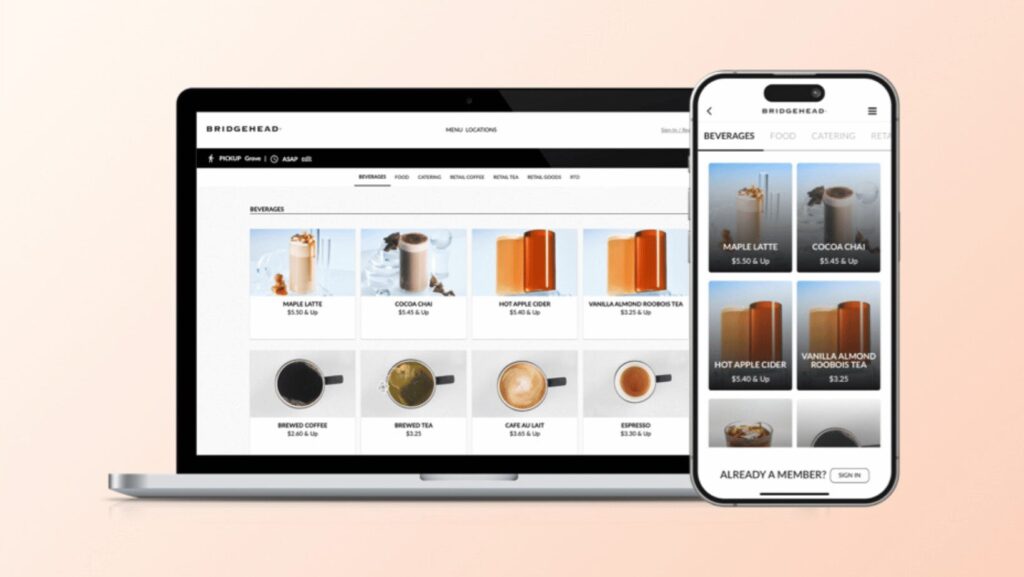
Here’s a comparison between third-party food delivery services (like UberEats) and first-party apps (like Craver) for a quick overview of the differences.
| Feature | Third-Party Food Delivery Services | First-Party App |
| Example | UberEats, DoorDash, Grubhub | Craver |
| Commissions | Up to 30% commission | $0 commission |
| Delivery Fee | Percentage-based or flat-fee based on distance | Flat-fee |
| Customer Data | Owned by the third-party | Owned by your restaurant |
| Branding | Listed alongside competitors | Only your restaurant’s branding |
| Loyalty | Benefits the third-party | Benefits your restaurant |
→ Pro Tip: If you don’t want to tackle delivery entirely on your own, you can still use a custom-branded mobile app with external delivery integrations. Starbucks and McDonald’s both do it this way!
Cravers Delivery App Exit Strategy Guide
Ready to move from third-party food delivery services to your own, first-party app? We’ve got just what you need to get started!
Our Delivery App Exit Strategy Guide shows you how to seamlessly transition from third-party to first-party delivery services, with additional insights on:
- The hidden costs of third-party food delivery apps
- The top alternatives to third-party food delivery apps
- How to move your customers from third-party apps to your own app
FAQs
It depends. Third-party food delivery services can help new customers discover your restaurant and make it easy for existing app users to order from you, but they also come with high commission and service fees that might not be worth it to you.
Will customers switch from Uber Eats or DoorDash to ordering directly?
Yes, if you make the transition simple and enticing! You can encourage customers to switch to your first-party app by offering exclusive, in-app discounts and creating a loyalty program that’s only available on your mobile app.