Ever wondered why Starbucks’ $7 lattes feel justifiable? Or why you’re willing to drive to Starbucks, despite other coffee shops being closer?
It’s not just the coffee — it’s the psychology behind Starbucks’ sales.
From business decisions to promotion decisions, everything Starbucks does is based on psychological concepts that boost sales, promote loyalty, and make customers feel special.
In this blog, we’ll take you through five psychological concepts that fuel Starbucks’ sales, from what they are and why they work to how you can implement them at your own coffee shop.
Let’s get started!
1. The Decoy Effect
What it is
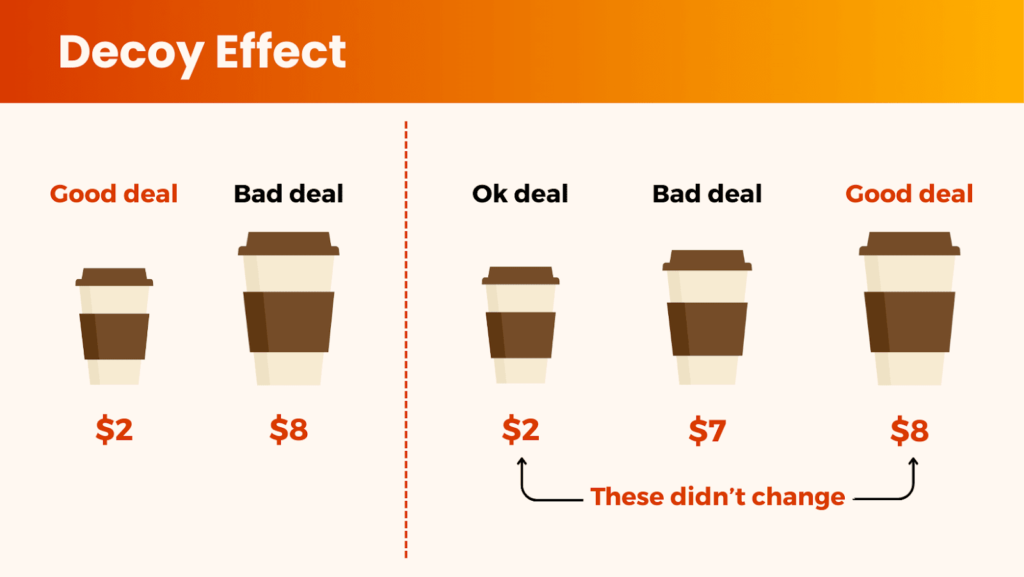
The decoy effect explains that when people are deciding between two options, adding a third, less ideal option — AKA a decoy — can change how they perceive the original two options.
How it plays into Starbucks’ sales
Starbucks is known for its three main sizes: tall, grande, and venti.
If you look at the prices of their Blonde Vanilla Latte, it’s $5.25 for a tall, $5.95 for a grande, and $6.25 for a venti. Obviously, the venti is the best deal here, since it’s a lot more coffee for only $1 more than the tall, and $0.30 more than the grande, right?
Right — because the grande is the decoy!
Starbucks wants you to order the venti, so by making it the most attractive price through the decoy effect, you’re more likely to spend the money to get the biggest size.
Pro tip → Offer the most savings on higher-priced items to incentivize bigger purchases.
2. The IKEA Effect
What it is
The IKEA effect suggests that people place higher value on things they make, assemble, or customize themselves. The more effort people put into something, the more it’s worth to them.
How it plays into Starbucks’ sales
Starbucks’ billion-dollar customization strategy is the IKEA effect in action.
There are virtually endless customization options at Starbucks, with some estimates suggesting there are over 383 billion drink possibilities for caffè lattes alone. So, when a customer finds the customization that works best for them, it really feels like theirs — especially since it probably took some effort on their part to figure out what they liked best.
This is what kicks the IKEA effect into play, because the more effort your customers put into creating their perfect drink, the more value they’ll place on getting it time and time again.
Pro tip → Add customization options or add-ons to your menu to give your customers ownership over what they order.
3. The Scarcity Principle
What it is
The scarcity principle suggests that the more exclusive or hard-to-get something is, the more that thing will increase in value… regardless of whether that exclusivity is real or fabricated.
How it plays into Starbucks’ sales
Starbucks leverages the scarcity principle multiple times a year with their limited-time offerings.
Take their seasonal drink launches, for example. Every year, coffee lovers count down the days until they can get their once-a-year pumpkin spice lattes and peppermint mochas. And, because these drinks are only available once a year, customers rush to get their seasonal favorites as soon as they’re available — and Starbucks’ sales skyrocket like clockwork.
This is exactly what the scarcity principle is all about. Even though customers know PSLs will come back at the same time next year, it’s just exclusive enough to bump up the drink’s value.
Pro tip → Build scarcity by creating your own seasonal flavors, limited-time offerings, or member-only launches and deals.
4. The Endowment Effect
What it is
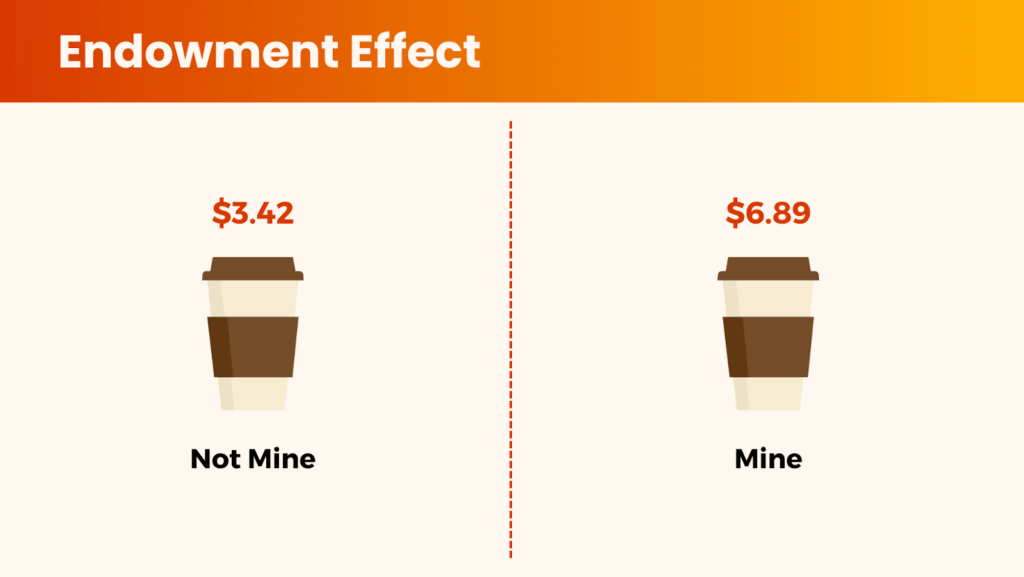
The endowment effect is the idea that people place more value on things they own. So, your coffee cup is worth more than someone else’s coffee cup — even if they’re the exact same.
How it plays into Starbucks’ sales
The most popular way Starbucks plays into this idea is by writing names on cups.
When a customer sees their own name written on a cup (spelled correctly or otherwise), it can create an immediate sense of ownership between them and their order, no matter how run-of-the-mill their experience was otherwise.
And, because of the endowment effect, a customer who feels like they “own” their Starbucks drink is a customer who places a higher value on that experience (and a high value perception can lead to stronger loyalty, repeat visits, and boosted sales).
Pro tip → If you don’t want to copy Starbucks’ name game, consider adding a personalized message, a simple smiley face, or a heart to your cups.
5. Multi-Sensory Marketing
What it is
Multi-sensory marketing is a strategy based on embodied cognition, the psychological concept that suggests sensory experiences can influence people’s memories, emotions, and feelings.
How it plays into Starbucks’ sales
Starbucks is a huge proponent of multi-sensory branding, from ads to in-store experiences.
Take Starbucks’ famous red holiday cups, for example. Customers see the red cup and feel nostalgia for the holidays, or excitement for seasonal flavors. This visual element helps create what Forbes calls a “collective longing for connection, comfort, and community” — all because customers see the color red on a cup.
Starbucks is also working on other sensory experiences as part of its new marketing strategy, like creating commercials that showcase the “sounds” of coffee and revitalizing the instantly recognizable taste of their coffee beans.
Pro tip → Start building sensory-based experiences by picking a memorable cup color, creating a regular in-store playlist, or developing a signature drink taste.
Wrap up
The five psychological principles outlined in this blog definitely play a big role in Starbucks’ sales success, but they’re not the only contributing factors.
In The Ultimate Starbucks Strategy Guide, we’ll take you through everything Starbucks does to maintain their spot as one of the most successful coffee shops in history, including:
- Their approach to hiring that prioritizes collaboration, a strong company culture, and employee growth
- Their revamped staffing strategy, designed to serve customers and support baristas better than ever before
- The cold, customized drink strategy that helps customers feel seen while earning the brand billions in revenue
…and more!
Get caught up on the “why” behind Starbucks’ sales success with The Ultimate Starbucks Strategy Guide.