If you’ve read anything about restaurants this year, then you’ve heard the words “restaurant AI” a few dozen times (at least).
Restaurant AI has been one of the industry’s hottest topics in 2025, with information about newly created efficiencies and exciting new partnerships hitting the (digital) shelves almost daily.
But, unlike cereal milk lattes, scrambled pancakes, and the rest of this year’s “here today, gone tomorrow” trends, AI trends aren’t as fragile.
With only a few months left in 2025, we expect nothing less from AI trends than a strong end to the year. Then, in 2026…
We predict a massive acceleration.
The popularity of restaurant AI is only going to grow next year, with popular trends like voice assistants and predictive analytics getting bigger, stronger, and more impactful than ever before.
In this blog, we’ll share the four restaurant AI trends to watch in 2026…
But not without taking a moment to appreciate how far restaurant AI has come, first.
How Restaurant AI Has Changed (And Improved)
Restaurant AI has steadily gained popularity over the past few years, but it’s not as new a concept as you might think.
In reality, AI has been used in restaurants for longer than ChatGPT has been “alive” — it just looked a bit different (and a lot simpler) back then.
Domino’s Pizza, for example, is often deemed one of the oldest AI users in the restaurant industry, launching voice assistant “Dom” back in October 2014.
Dom enabled users to place orders verbally through Domino’s app, toggling on their microphones to tell Dom what size pizza they wanted or even ask for suggestions. Then, once Dom had put the pizza order in the cart, users could complete their checkout manually.
So, while decade-old AI like Dom is undoubtedly far less sophisticated than our current voice assistant models, he perfectly represents what “AI of restaurants past” was like:
A fairly basic augmentation of a mostly manual process.
Now, in 2025, AI is still used to augment manual restaurant processes, but it’s less “keep the manual checkout” and more “automate the entire thing” than older AI like Dom — a perspective that’ll keep evolving with 2026’s increasingly sophisticated trends.
4 Restaurant AI Trends to Watch in 2026
1. Drive-Thru Voice AI for Faster, Better Service
Throughout 2025, operators saw two things change in their customers.
First, the amount of time people were willing to wait in line or on hold had decreased. In a Valero survey about waiting on hold, 60% of customers said they wouldn’t wait for longer than a minute… and 32% reported they wouldn’t wait at all.
Second, people started craving faster and easier service. That includes everything from payment, with 49% of consumers preferring the faster contactless payment option, to ordering, with 47% of consumers saying they’d skip a drive-thru-less establishment.
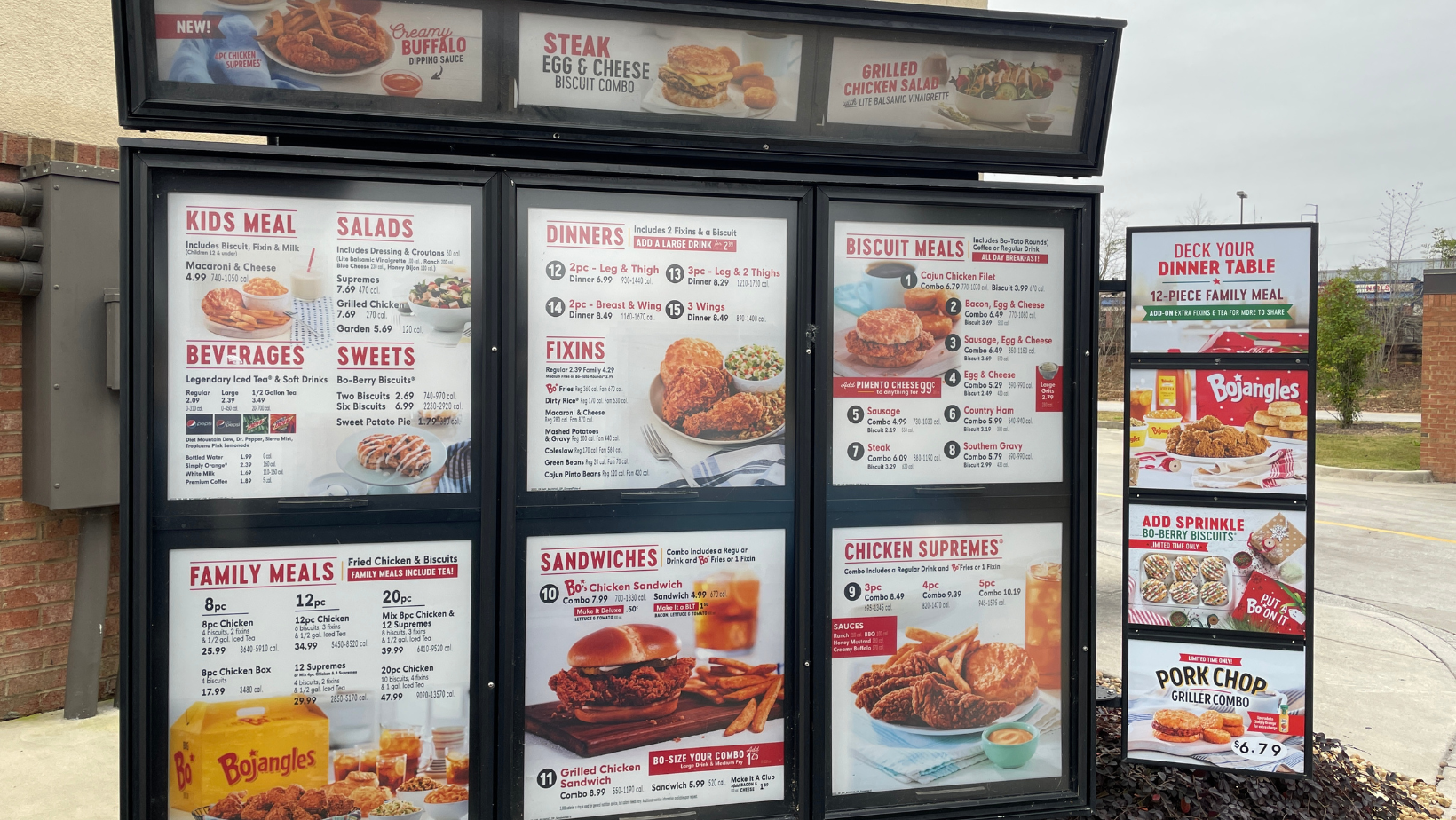
So, in 2026, we expect restaurants to better cater to both preferences with AI-powered drive-thru solutions — like Bo-Linda, Bojangles’ new AI-powered, drive-thru voice system.
Bo-Linda was created by tech company Hi Auto, designed to decrease the drive-thru’s dependence on (human) employees while improving service speed and accuracy for a better customer experience.
And, based on the initial 200-store rollout, things are going really well. So far, Bo-Linda has reduced “employee workload by a third,” taking payments, upselling, and maintaining an impressive 95% order accuracy the whole time.
“She has become so integral to the restaurant’s operations that workers now think of her as another employee,” said Richard Del Valle, Bojangles CIO. “If we told the team we were taking it out, we think they’d be pretty unhappy with us.”
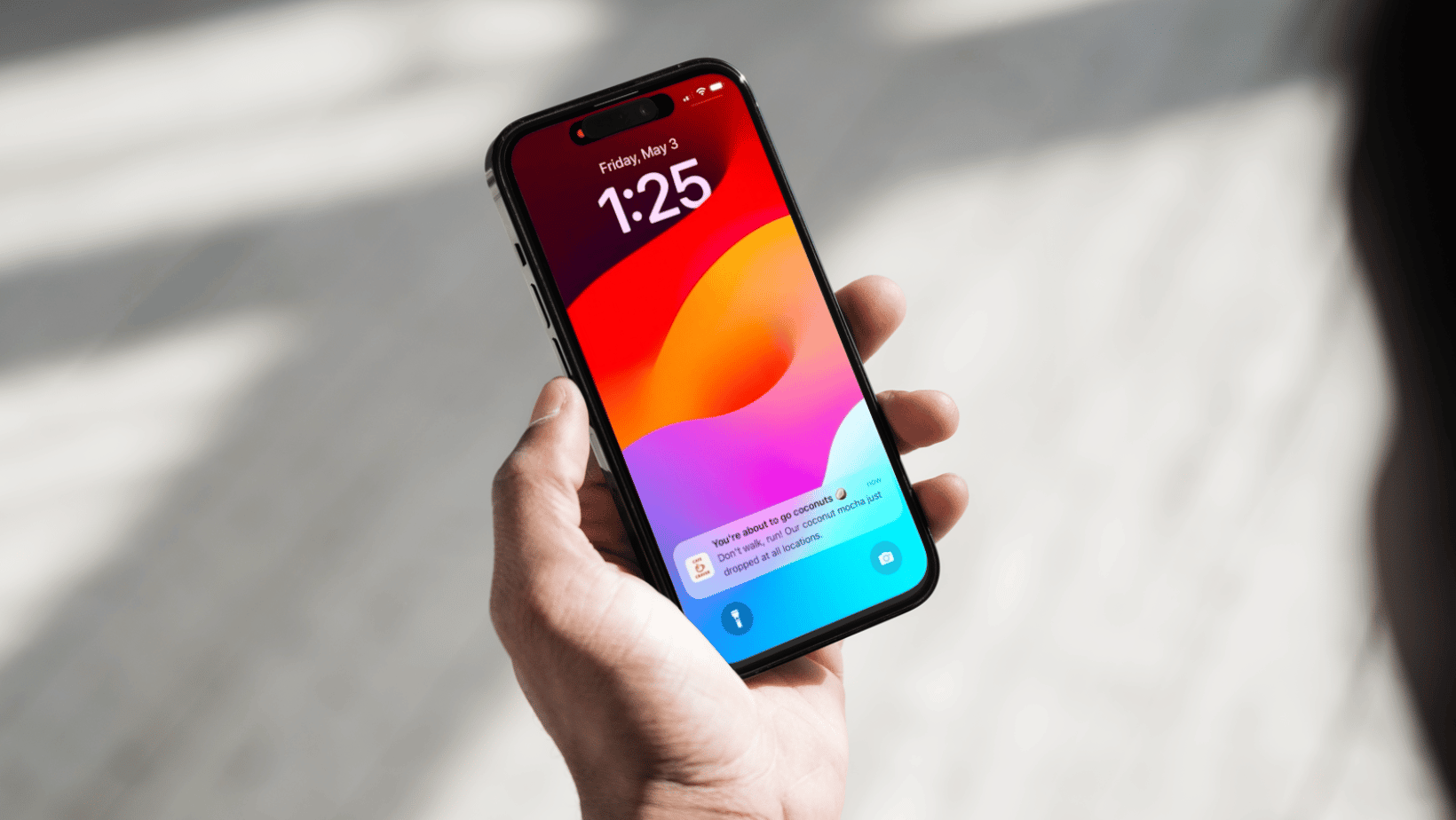
2. AI Push Notifications for Highly Personalized Marketing
In 2025, restaurants recognized the huge importance customers place on personalization.
According to a customer experience study from earlier this year, 81% of consumers prefer companies that offer personalization, especially when those efforts happen on platforms they already use.
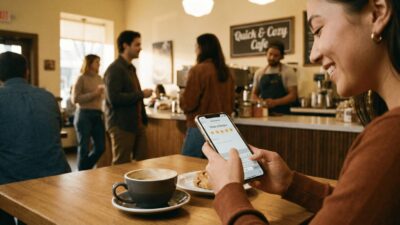
Combine the desire for people to be met where they are with the 62% of consumers who shop on their phones and mobile personalization emerges as a clear-cut winner… but how can your restaurant actually offer that personalized experience?
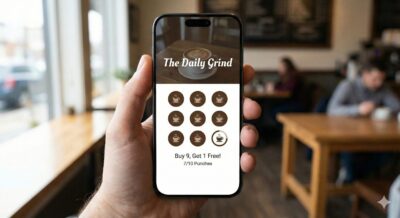
Simple: a mobile app, Customer Data Platforms (CDPs), and AI push notifications.
Once your restaurant has a mobile app — which is a necessity for push notifications! — adopting a CDP with AI capabilities is the next step to better personalization.
CDPs take data from different areas of your business, amalgamating information into what Segment calls an “understandable unified customer profile.” Then, you can use that data to inform new highly segmented, highly personalized marketing efforts like AI push notifications.
This combination of tech solutions not only meets your customers where they are — because Americans spend ~4.5 hours on their phones daily — but it also delivers the hyper-personalized experience your customers are looking for with AI-guided segmentation and targeting strategies.
In 2026, we predict that more restaurants will start leveraging the personalization triple threat that is mobile apps, CDPs, and AI push notifications.
3. AI Kitchen Automation for Streamlined Operations
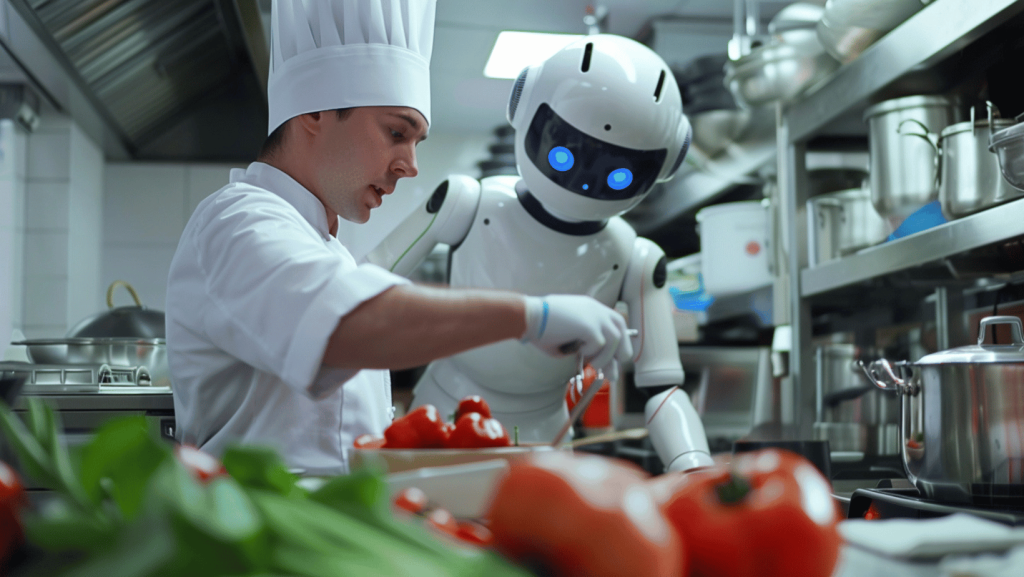
Using AI to automate kitchen operations has become far more popular in 2025.
From boosting efficiencies with solutions like White Castle’s AI-voice bot to automated restaurants, AI automation has proven to be both versatile and effective in improving operations.
But, perhaps the best part of AI-powered kitchen automation is the secondary impact it can have outside of the kitchen.
Take Chipotle, for example.
The brand recently announced that its digital makeline and avocado-prepping systems were going through final checks and tests before heading straight to pilot testing. And, while both of these AI systems were designed with prep in mind, their impact will actually be much greater than that.
Alongside more streamlined prep, both automation systems will also free up employee labor, support sustainability and waste reduction initiatives, save money with a greater yield-per-product, maintain a more consistent product quality…
And offer a bunch of other benefits outside of the automation’s original intention, too.
“These robotic devices could help us build a stronger operational engine,” said Chipotle’s Chief Customer and Tech Officer, Curt Garner. “[One] that delivers a great experience for our team members and our guests while maintaining Chipotle’s high culinary standards.”
With how holistic the positive impact of AI-powered restaurant automation can be, we predict these efforts will only increase (and continue to improve) in 2026.
4. Predictive Analytics Using AI for Menu Optimization
This year, the industry also saw restaurant AI being used for predictive analytics and different optimization efforts.
One popular use case for AI-powered predictive analytics is food waste reduction. Sustainability efforts are becoming increasingly important to restaurateurs and diners alike, especially considering the restaurant industry’s contribution to America’s food waste problem.
And, when you look at the work Winnow is doing, the power of AI and predictive technology in sustainability becomes incredibly clear.
Winnow has been helping restaurants reduce food waste for years, most famously using their smart-scale tech and AI-powered analytics to reduce food waste in IKEA restaurants by 54%.
With their own AI-powered cameras, Winnow scans, measures, and records food waste, displaying the results on an easy-to-read digital screen. Then, Winnow uses collected data for predictive analytics, offering AI-informed suggestions on inventory amounts, preparation optimizations, and waste minimization.
“[This system] makes it really easy for us to gather accurate data on what’s being wasted in these kitchens,” said Marc Zornes, Co-Founder of Winnow. “And it’s important that you make the [waste reduction] process easy because kitchens are very busy places.”
In 2026, we predict more restaurants will turn to AI-powered predictive analytics to help them optimize their inventory and prep while improving their sustainability efforts and reducing their environmental impact.
Start Using Restaurant AI With Craver’s ChatGPT Prompts Guide
If you’re ready to start using AI but aren’t sure where to begin, having the right prompts makes all the difference.
Our ChatGPT Marketing Prompts Guide is designed to help restaurant and cafe owners start using AI quickly and effectively, including:
- Simple tips to help you write stronger, more effective prompts in just one request.
- Copy-and-paste prompts to generate fresh content ideas in seconds.
- Ready-to-use prompts to help you create marketing materials like social posts, promotions, and outreach campaigns faster.
With the right prompts, you can spend less time figuring out what to ask AI — and more time putting great marketing into action.