Why Coffee Shops Are Replacing Paper Punch Cards
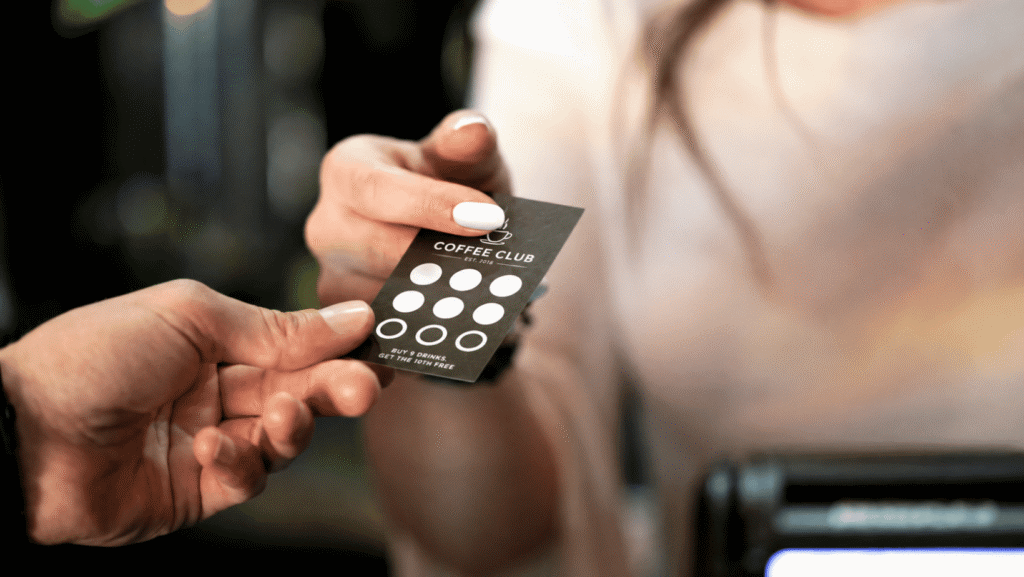
For many coffee shops, digital rewards programs are replacing the now-outdated paper punch cards.
While paper punch cards do have some appeal, especially in the simplicity department, the benefits simply don’t outweigh the drawbacks. Here are the top five reasons coffee shops are actively looking for punch card alternatives.
- They’re easily lost/misplaced — It’s incredibly easy for customers to misplace a paper punch card because it’s just a loose, paper card. If it falls out or gets left behind at the coffee shop, it’s gone for good.
- They’re easily stolen — Paper punch cards don’t have any identifying information on them, which means someone could easily steal your card, take advantage of your progress, and redeem your rewards.
- They can’t give you customer data — There’s no way for your coffee shop to collect data from paper punch cards. That means no purchase history, no repeat visit information, no preferences… nothing.
- They can’t be automated — If you use paper punch cards, they need to be manually stamped or punched every single time. There’s no way to automate this process, meaning it has to stay analog forever.
- They’re impossible to scale — Paper punch cards aren’t a scalable loyalty option. Customers only use one punch card at a time, and since they’re usually limited to certain drinks, there’s no incentive to buy more.
Paper Punch Cards vs. Digital Loyalty Program
So, now you have an idea of why coffee shops tend to move away from paper punch cards… but what are the real differences between that and an app? Take a look at this chart for a high-level overview of digital vs paper loyalty programs.
| Paper Punch Card | Digital Loyalty Program | |
|---|---|---|
| Customer experience | Basic Customers have to remember to bring their card every single time, and a lost card means all progress is gone. | Effortless People are rarely without their phones, so they’ll always have their app on-hand to check balances and redeem rewards. |
| Staff workflow | Simple Staff need to punch the card on eligible orders, but otherwise it’s fairly hands-off. | Simple Staff are entirely hands-off unless troubleshooting or support is needed. |
| Tracking accuracy | Very low You can only track who does/doesn’t have a card, and this is usually self-reported. | Very high Tracking happens automatically, with no self-reporting, and is typically displayed on a digital dashboard. |
| Reward flexibility | Minimal flexibility You can pick the reward and frequency, but the format is pretty set, e.g. a free drink every 10 purchases. | Maximum flexibility You get to customize the entire rewards process, from the type of rewards earned to the frequency. |
| Marketing capabilities | Limited Typically relies on traditional marketing methods, e.g. word of mouth, posters and signage. | Unlimited You can use a mix of traditional and digital marketing methods, e.g. push notifications and in-app notifications. |
As you’re debating between a loyalty app vs a punch card, keep in mind that digitizing your loyalty program means more than just replacing the card format. With a digital loyalty app, you’ll also need to adjust how you manage your loyalty program. This will go from a completely analog process to a completely digital one, which may require additional training and some extra patience as your team gets used to the new process.
→ Need some inspiration for your own loyalty program? Check out the best coffee shop loyalty programs on the market.
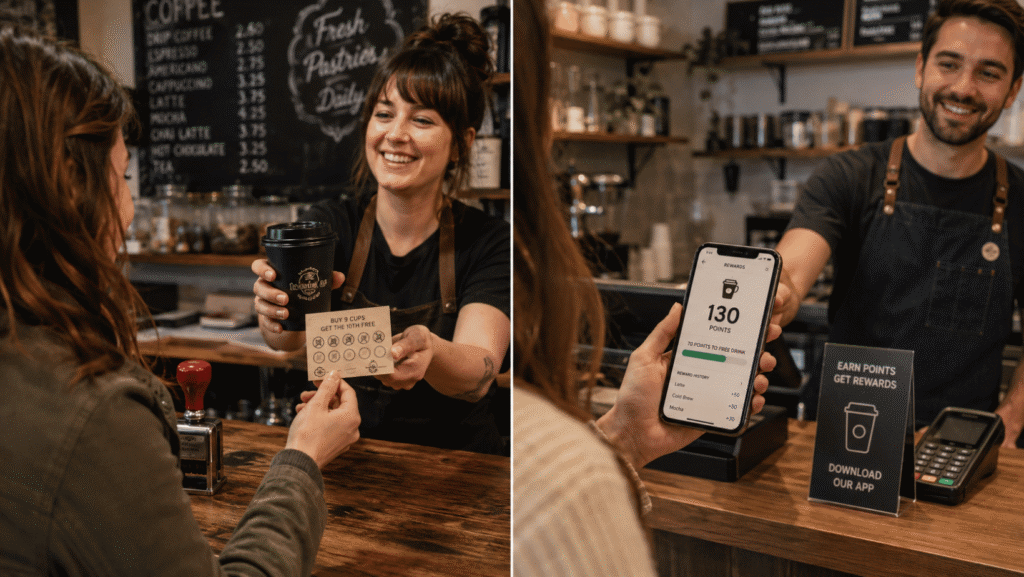
The Benefits of a Digital Loyalty Program for Customer Retention
The benefits of switching from paper punch cards to a digital loyalty program go beyond delivering a more effortless customer experience and expanding your marketing opportunities.
- Better customer retention — Digital loyalty programs are highly personalized, making customers feel seen, heard, and more likely to return than a generalized punch card.
- Easier reward redemption — With a digital loyalty program, customers can redeem rewards in just a few clicks on the app. No customer service or employee intervention needed.
- Personalized offers — It’s easier to tailor the customer experience to each person with a digital loyalty program, whether through custom push notifications or in-app offers.
- Stronger engagement — Digital loyalty programs often see stronger engagement than paper punch cards because they’re more personalized and gamified.
- First-party customer data — With a digital loyalty program, customer data is automatically collected and displayed in real-time, so you always have real data to work with.
- Reduced operational friction — Once your digital loyalty program is set up, the operational need drops to basically nothing. You’ll only need to intervene if there’s an issue!
- Measurable return on investment — Because a digital loyalty program collects sales data, you’ll be able to track your loyalty program’s return on investment in real time.
→ For more guidance, check out this blog with four coffee shop retention strategies that’ll keep your coffee shop customers coming back.
How to Replace Paper Punch Cards Without Confusing Customers
If you’re ready to replace your paper punch card with a digital loyalty system but aren’t sure how to make the process as confusion-free as possible, then you’re in good hands. Here’s the five -step process we recommend for seamlessly replacing your paper punch card system.
Step 1: Do the behind-the-scenes work
This first step is about building the foundation of your new program and defining what your brand-new digital loyalty system will look like. You’ll also want to figure out what your loyalty goals are, what rewards structure you’ll use, and which technology provider you’ll go with.
Step 2: Communicate the change
Once you know what your new loyalty program will actually look like, it’s time to start telling people about it! Start by letting your staff know and walking them through the high-level changes, then move on to letting your customers know both in-person and online.
Step 3: Train your staff
This step is key for a seamless transition. Every single person on your team should have a foundational knowledge of how your digital loyalty app works and how to do basic troubleshooting to help customers when they need it — including you.
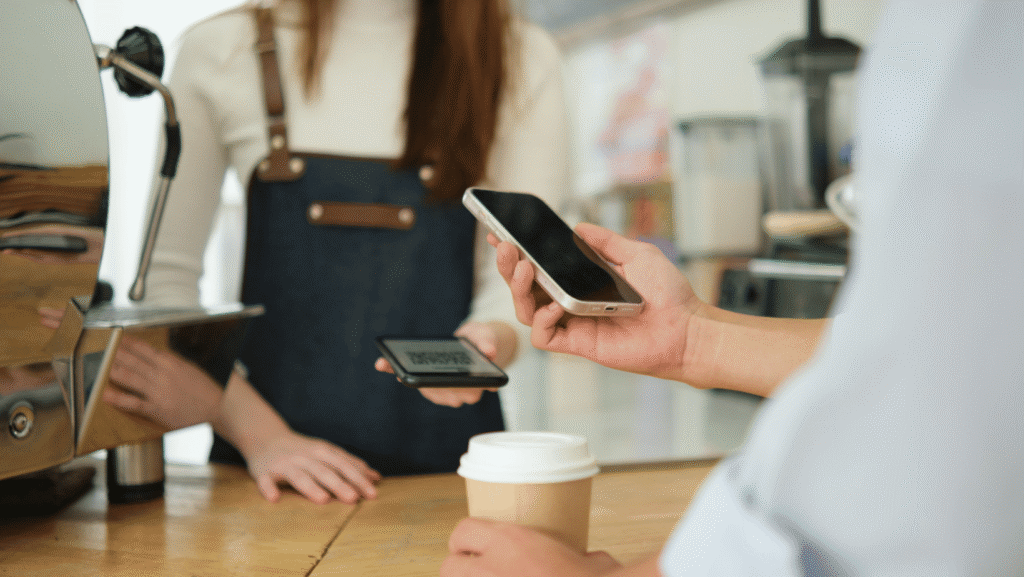
Step 4: Migrate your current members
If you have any existing loyalty members whose information you have access to (and permission to use), you can migrate them to your new loyalty platform. If you’ve been using paper punch cards, you may not have any data to migrate, and that’s okay!
Step 5: Officially launch + monitor performance
Once you’ve migrated your existing members (if you have any), it’s time to launch to the public. Share the news about your new loyalty program far and wide, monitor the sign-up/onboarding progress, and graciously accept feedback. It’s invaluable data you can use to improve!
→ Did you know brands are combining digital loyalty and punch card loyalty — and doing it well? Check out our favorite examples here.
Common Mistakes to Avoid When Switching to Digital Loyalty
Highlight pitfalls like making sign-up too complicated, offering weak rewards, failing to promote the new program, not training staff, ignoring customer data, and choosing tools that do not fit restaurant operations.
As you’re switching away from paper punch cards and toward your new digital loyalty program, there are a few common mistakes you’ll want to keep in mind — and work proactively to avoid.
✗ Don’t make sign-up too complicated — Customers shouldn’t have to jump through a million hoops to sign up for your new loyalty program. First name, email, and that’s it.
✗ Don’t offer rewards nobody wants — If you want people to buy into your loyalty program, you need to offer rewards people actually want. Small, random discounts aren’t enough!
✗ Don’t forget to promote the new program — As soon as you’ve solidified the details of your new loyalty program, start promoting it. People won’t sign up if they don’t know it exists.
✗ Don’t rush through staff training — Staff training on your new loyalty program should be a priority, not an afterthought. Everybody should be able to navigate the program with confidence.
✗ Don’t ignore what the data says — Pay attention to what your data is telling you. You may be surprised by what it says, but it’s coming straight from your customers. Listen to them!
→ Learn what else not to do with your digital loyalty program in our blog about Starbucks’ biggest rewards program mistakes.
FAQs
Digital loyalty programs are typically more effective for coffee shops because they’re highly customizable, give you easy-to-access customer data, and reduce operational friction. However, your cafe may be fine with what a physical punch card can offer, and that’s okay too.
Will customers actually use a digital loyalty program?
Yes — but you need to actively encourage the buy-in. Features like personalized offers, sign-up bonuses, and free drinks for new members are all great ways to get customers to sign up for a digital loyalty program and stay engaged long-term.
How do you move existing paper punch card customers into a digital system?
The first step is to digitize your existing loyalty cards, migrating any existing customer profiles you have to your mobile loyalty program setup. From there, you’ll want to advertise the new loyalty program to get people to actively use it.
Can a digital loyalty system work without a branded mobile app?
Yes. A QR code loyalty program or a digital punch card system won’t have as many features as a branded mobile app, but they can still work as an app-free digital loyalty system.
What features should businesses look for in a digital loyalty platform?
A good digital coffee loyalty platform has features like custom branding, push and in-app notifications, customizable offers and deals, and integration capabilities with your existing systems (like your POS). Check out this blog for our full list of must-have digital loyalty features.
How does digital loyalty help increase repeat orders?
Digital loyalty programs help increase repeat orders by rewarding customers for building habits. Personalized rewards hook customers in, progress tracking keeps them engaged, trackable earnings gamify the experience and boost buy-in… then the visits get more frequent. It’s all part of a seamless, self-sustaining retention system.
How long does it take to launch a digital loyalty program?
That depends on the features you need and your mobile loyalty program setup. A basic program (like a digital punch card system) can be set up in a matter of hours, and launched fairly quickly. A more in-depth program with custom branding, integrations, and customer migration may extend the timeline to days or even weeks (depending on the level of customization).
Can a digital loyalty system also work for restaurants?
Absolutely. Mobile loyalty systems work very well in restaurants for the same reasons they work in coffee shops: they reward loyalty, boost engagement while redeeming rewards, encourage repeat purchases, deliver personalized offers, and generate data to better understand customer behavior.