In Part 1 of our influencer marketing series, we talked about what influencer marketing for restaurants is, why it works, what kind of influencers are out there, and how to find them.
Now, in Part 2, we’re taking things to the next level.
In this blog, we’ll take you through all things influencer marketing for restaurants, from the five steps of structuring an influencer marketing collaboration to the metrics you need to measure success. We’ve also got a chart with top-notch examples to help get the inspiration flowing!
Ready? Let’s get started.
How to structure an influencer marketing collaboration
Step 1: Define your goals
The first step to structuring an influencer marketing collaboration is defining your goals and figuring out why you want to explore influencer marketing for your restaurant in the first place.
What do you want to get out of it? Do you want to:
- Build brand awareness?
- Grow your social media accounts?
- Create some expertly-crafted content?
- Generate more foot traffic for your restaurant?
Knowing your “why” can help you map out the rest of your influencer marketing collaboration effectively and strategically. It’ll also give you some guidance on what kind of restaurant influencer you want to work with — which is where step 2 comes into play.
Step 2: Pick the right influencers (~100)
The second step to structuring an influencer marketing collaboration is determining what kind of influencer you want to work with and picking the right one for your restaurant.
Two types of influencers make the best partners for locally-owned restaurants:
- Nano influencers — Between 1K and 10K followers
- Micro influencers — Between 10K and 100K followers
Not only are nano and micro influencers typically more affordable for independently owned restaurants, but they actually have stronger engagement rates than the big creators. Massive influencers are usually doing double duty as celebrities or TV personalities, so they can’t often give small audiences the attention and engagement that smaller creators can. Luckily, that’s a win-win for you — you save some money on marketing and get better results!
For a more detailed breakdown on the types of restaurant influencers and where to find the right influencer marketing partner for your restaurant, check out Part 1 of our influencer marketing series!
Step 3: Choose the format
The third step to structuring an influencer marketing collaboration is picking what content format will be the focus of your restaurant’s influencer marketing efforts.
The nice thing about this step is that there are really no wrong answers! Influencer marketing for restaurants can look like just about anything, including:
- Seasonal Instagram Reels, like this Dunkin’ collab with Hilary Duff
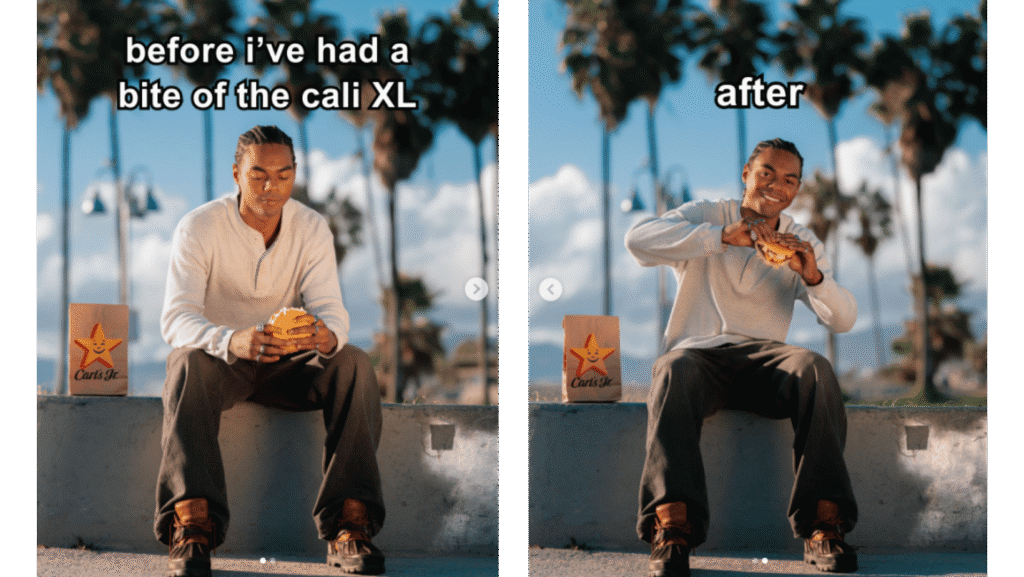
- Trend-following carousels, like this Carl’s Jr. collab with designer Saint
- “Behind the Scenes” TikToks, like this Sweetgreen collab with reality stars Nic and Olandria
You don’t have to pick just one format, either. You can experiment with multiple types of content and see what lands best with your audience. The influencer you work with might even have ideas and insights to share, too!
Step 4: Decide what to offer
The fourth step to structuring an influencer marketing collaboration is figuring out what you’re going to offer your restaurant influencers in exchange for content creation.
There are tons of different ways to “pay” your influencers for creating content, including:
- A flat-fee payment per post or video (or for multiple posts/videos)
- Performance-based payment that varies depending on content conversions, likes, etc.
- Compensation in the form of a product or service (i.e., free meals, exclusive experiences, etc.)
While you’re working out what you can offer your restaurant influencers, remember that not all influencers have the same payment structure. Some might be okay with a free meal and restaurant merch, while others want to be paid per post. Make sure you’re transparent and upfront about what you can offer — it’ll start the relationship on the right foot!
Step 5: Write a simple contract
The fifth and final step to structuring an influencer marketing collaboration is creating an influencer marketing contract for your restaurant.
The contract should clearly outline what’s expected out of the influencer marketing partnership and answer questions like:
- What are the deliverables?
- What’s the timeline for the project?
- What can the content be used for (and by whom)?
- What is the payment for the project? When will payment be made?
You’ll also want to touch on things like confidentiality, protecting sensitive information, working for competitors, and any legal information about the project and/or how to handle disputes. The contract is meant to protect both parties, so make sure all of your bases are covered.
How to measure the success of influencer marketing for restaurants
Several metrics can be used to measure the success of influencer marketing for restaurants — and a lot of them are actually pretty easy to track!
Engagement
This is one of the easiest success metrics to track: How many likes did you get on your influencer marketing post? Comments? Shares? Views?
More engagement is definitely better when it comes to influencer marketing because it gets your content in front of more eyes. More eyes on your content = more prospective customers, and that’s something every restaurant wants!
Follower growth
This is another super simple success metric to track: How much did your follower count grow after your influencer marketing campaign launched?
These metrics are also helpful to prove to yourself/your team/your marketing person that influencer marketing for restaurants really works. Just don’t forget to track your follower count before the influencer marketing post(s) go out!
Foot traffic
This metric is a little trickier because it’s hard to tell what influenced a customer to visit.
The best strategy for this is creating an exclusive promo code for your influencer marketing post(s). Track the number of times the promo code was used, and you’ve got valuable data on how much foot traffic your influencer marketing campaign generated.
Sales impact
This metric is super important, especially for influencer marketing campaigns that focus on a specific product.
As you track your restaurant’s sales, pay extra attention to the product(s) your influencer talked about. If order volume is increasing, your influencer marketing campaign is working as intended! If order volume is unchanged (or decreasing), something needs to change next time.
Examples of influencer marketing for restaurants
So, we’ve talked about how to set up an influencer marketing campaign and what success metrics you should look out for. But what does influencer marketing for restaurants actually look like in practice?
Here are some great examples of influencer marketing for restaurants (and a few coffee shops!) to help inspire your next campaign.
| Partnership | Campaign Details | Results |
| Cringe Carter x Dunkin’ Donuts | Promoted new Dunkin’ Donuts items on TikTok with taste-test-style videos | 3M+ likes 10M+ views 11K comments |
| BTS x McDonald’s | Launched a BTS version of an existing meal with two exclusive sauces | $200M+ global revenue (estimated) 25% increase in app downloads |
| Alix Earl x Carl’s Jr. | Created Super Bowl ads inspired by Carl’s Jr’s ads from the early 2000s | 47% engagement rate 91% increase in followers for Carl’s Jr |
| Nara Smith x Erewhon Cafe | Launched + created content for an exclusive, health-focused smoothie | 160K+ likes 1K+ comments 4M+ views (IG) / 6M+ views (TikTok) |
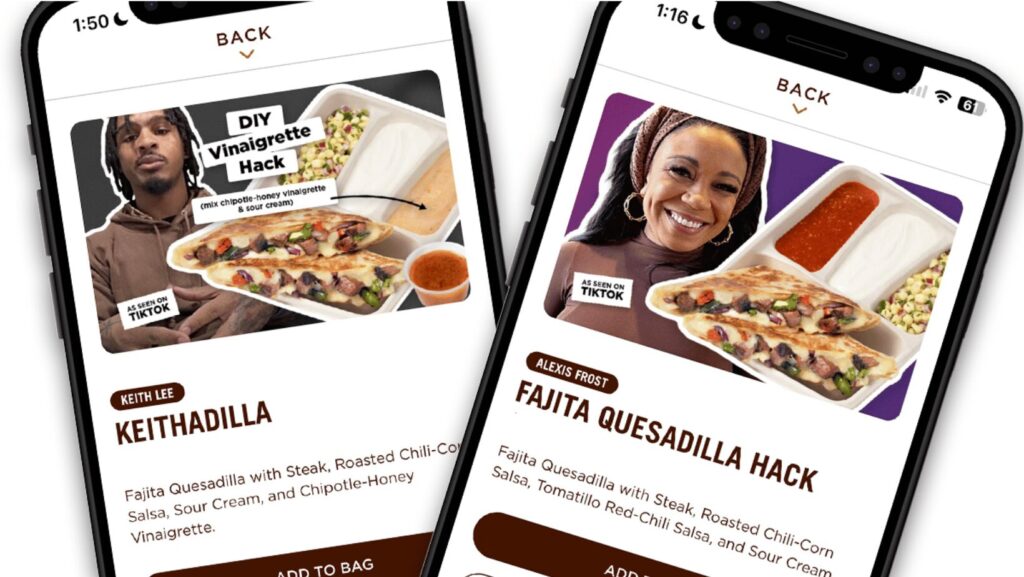
| Alexis Frost & Keith Lee x Chipotle | Launched + promoted the Fajita Quesadilla (which started as a food hack) | 34M impressions on social media Rewards enrollments increased by 37% |
| Cardi B & Keith Lee x Easy Street Burgers | Tried and rated different menu items in collaborative, taste-test-style videos | 2M+ likes 44M+ views 11K+ comments |
→ Pro tip: Always ask for usage rights/permissions when sharing influencer content on social media! You can DM or email influencers to request permission to repost their content on your own accounts.
Wrap up
Now that you know how impactful influencer marketing for restaurants can be, you might want to explore other ways you can take your restaurant’s marketing efforts to the next level.
That’s where Craver’s Social Media Marketing Guide comes into the picture.
Our comprehensive guide is designed for owners, operators, and managers who want to strengthen their social media presence, but aren’t quite sure where to start. We’ll take you everything you need to ramp up your social media game, including:
- The basics of social media marketing for restaurants
- High-level strategies to guide your social media marketing
- Best practices to follow with your restaurant’s social media marketing
- How to engage your audience and build community through social media marketing
Why stop at influencer marketing for restaurants? Download the guide and ramp up your entire social media game!