
Why Coffee Shop Business KPIs Matter
So, you want to grow your coffee shop and boost profitability.
To do that, you need to know what’s working (so you can do more of it), what’s not working (so you can adjust), and whether the funds coming in are enough to keep you afloat – which is where key performance indicators come in.
Key performance indicators (KPIs) connect your daily operations to profitability, customer satisfaction, operational efficiency, and more, giving you a bird’s-eye view of how your business is doing and guiding data-driven decisions that’ll actually grow your business. In other words, they help coffee shop owners evaluate whether they’re making progress toward their goals and whether what’s going on behind the scenes is helping (or hindering) that success.
In this blog, we’ll guide you through the most important (and most practical) coffee shop KPIs, including which metrics are the most important overall and what KPIs you should look at for insights on sales, cost and profitability, labor and productivity, and customer retention.
Let’s get into it.
The Most Important Sales KPIs For A Coffee Shop
For coffee shop owners looking to learn more about their sales (and how to increase them), there are a few KPIs that should be top of mind. These metrics all focus on sales, growth, and revenue, both for specific time periods and for individual customers and products.
1. Total Sales
This is a high-level overview of how many sales you’ve made in a given time period (i.e., weekly, monthly, yearly). It’s a good health check to see whether sales and cash flow are where you need them to be.
2. Total Growth
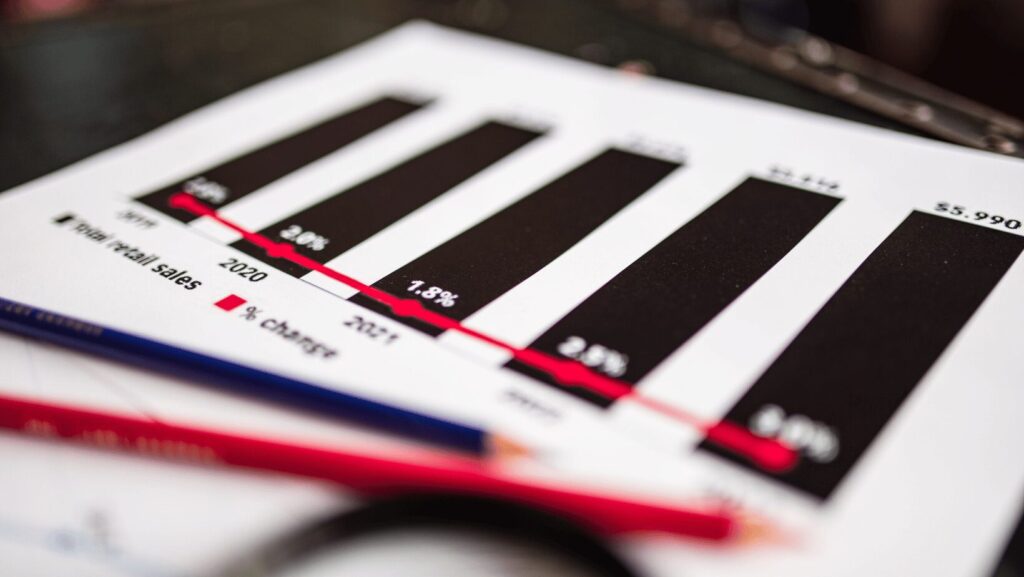
This KPI tells you how much growth you’ve seen over a certain period, whether that’s total revenue, profit, or another metric. This can be helpful to see whether your growth strategies are working or whether they need to be revisited next week/month/quarter.
Formula:
Growth rate % = (Final Value – Initial Value) / Initial Value x 100
3. Average Order Value (AOV)
AOV helps you understand how much customers are spending at your coffee shop on average for a specific time frame. This metric can give you insight into whether you need to try order-boosting strategies like upselling (for low AOVs) or if you just need to focus on maintenance (for a high AOV).
Formula:
AOV = Total Revenue / # of Orders
4. Sales By Channel
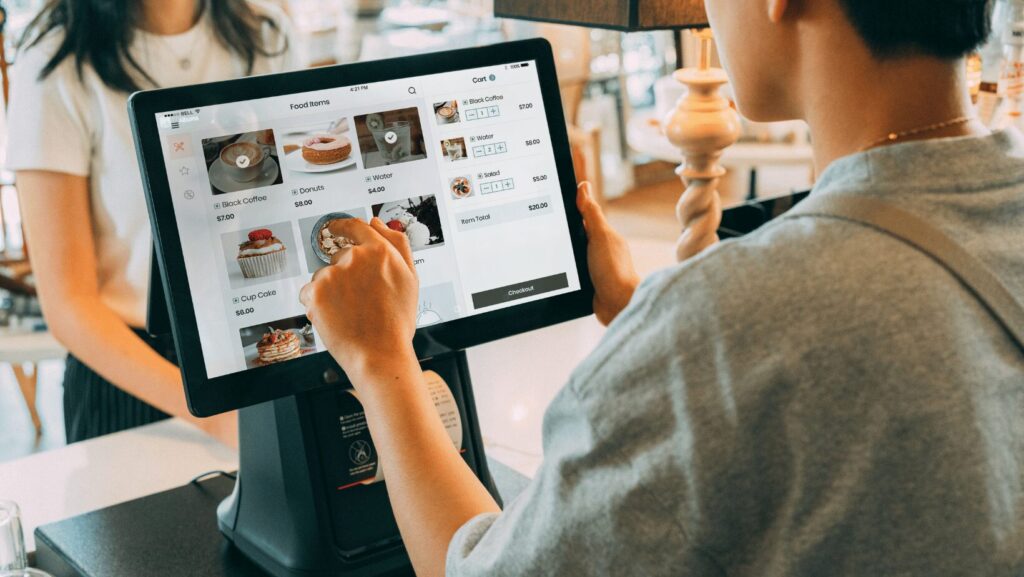
This KPI can help you understand which sales channels are the most profitable and which ones may not be pulling their weight. Many POS systems for coffee shops have the option to explore sales by channel, which can make tracking this KPI a lot easier.
5. Sales Mix By Product Category
This metric can help you understand which items are your top sellers in each product category (i.e., food, beverage, retail, etc.), and which items may be worth cutting next time you take a look at your menu. Using the food cost formula for coffee shops can also be helpful here!
Formula:
Sales Mix % = (Category Sales / Total Sales) x 100
Pro Tip: When you’re writing a coffee shop business plan, make sure to include details about measuring these KPIs in your “Financial Plan” section!
Coffee Shop Cost And Profitability KPIs To Monitor Closely
Coffee shop owners focused on operational costs and profitability should be looking at a different set of KPIs. These metrics are all focused on how much you’re spending to keep the doors open, what minimum cash buffer you need, and how much you’re actually bringing back into the business after you cover fixed costs and variable costs.
1. Cost of Goods Sold (COGS)
COGS is a metric that helps you understand the direct costs of producing something your coffee shop sells, from the cost of the ingredients to the cost of the labor it takes to make the product.
Formula:
COGS = Beginning Inventory + Purchases – Ending Inventory
2. Net Profit Margin
Your net profit margin is how much revenue your coffee shop is bringing in after you cover fixed costs and subtract your COGs, expenses, and other operating costs. It’s a good way to tell whether your business is bringing in enough money to stay afloat.
Formula:
Net Profit Margin = (Net Income / Total Revenue) x 100
3. Gross Profit Margin
Your gross profit margin is how much revenue your coffee shop is bringing in after subtracting your COGS (and nothing else). It can help you understand how profitable your coffee shop is at the product level.
Formula:
Gross Profit Margin = (Revenue – COGS) / Revenue x 100
4. Contribution Margin
Your contribution margin is how much revenue you keep from each sale after covering the variable costs of each item. It can help you figure out whether to increase the price of an item, discontinue it (because it’s not performing), or keep it as-is.
Formula:
Contribution Margin = Price Per Unit – Variable Cost Per Unit
5. Inventory Variance
This KPI represents the difference between your actual inventory and your theoretical inventory (based on what you’ve sold). Variance can happen for any number of reasons, from human error to theft, but understanding it can help you pinpoint hidden costs and identify/reduce waste.
Formula:
Inventory Variance = Actual Usage – Theoretical Usage
Labor And Productivity KPIs For Daily Operations
Coffee shop owners who want to understand their labor performance and efficiency should be exploring productivity-focused KPIs. These metrics offer the insights owners need to balance service quality with payroll control for a business that operates efficiently and is profitable (all while maintaining a good employee retention rate and staff satisfaction).
1. Labor Cost Percentage
Your coffee shop’s labor cost percentage is the ratio of your total labor expenses to your gross sales for a given time period. It can help you understand whether you’re over or understaffed during certain periods, validate your product pricing, and give insight into operational efficiency.
Formula:
Labor Cost % = (Total Labor Cost / Total Gross Sales) x 100
2. Sales Per Labor Hour (SPLH)
SPLH is a great productivity metric, demonstrating how much revenue is generated for every hour that an employee works. This KPI can help you understand whether you’re overstaffed, understaffed, or right on the money.
Formula:
SPLH = Total Net Sales / Total Labor Hours
3. Revenue Per Employee
This is another good productivity and efficiency KPI. The amount of revenue each employee generates reflects how well your coffee shop uses its workforce. The higher the revenue per employee, the greater the productivity.
Formula:
Revenue Per Employee = Total Annual Revenue / # of Employees
4. Scheduling Efficiency
This KPI measures how well the number of employees you scheduled matched the number of employees you actually needed. A high scheduling efficiency means your staffing levels are on point, which is good for business, employee satisfaction, and your employee retention rate.
Formula:
Schedule Efficiency = (Staff Scheduled / Staff Required) x 100

5. Order Throughput Rate
This KPI represents the number of orders your coffee shop staff completes in a specific time (i.e., hourly, per shift, etc.). The higher the order throughput rate, the more efficient your team is, and the more efficient your team is, the more revenue you can make.
Customer Retention And Experience KPIs For Long-Term Growth
The following KPIs are targeted toward coffee shop owners wanting more insight into the customer experience (and looking for more customer feedback). They’re focused on evaluating how satisfied your customers currently are and what you can do (or stop doing) to ensure customer satisfaction stays at an all-time high.
1. Repeat Purchase Rate
This KPI is exactly what it sounds like: A measurement of how often customers are repeatedly purchasing from your coffee shop. There are a lot of things that can influence repeat purchase rate, from service quality to order accuracy, but delivering consistently high-quality service is your best chance at boosting this.
Formula:
Repeat Purchase Rate = # of Repeat Purchase Customers / Total # of Customers
2. Customer Frequency
Customer frequency (sometimes also called “purchase frequency”) is how often a customer buys from your coffee shop in a specific time period (i.e., week, month, quarter, etc.). It can give you invaluable insight into customer retention, customer demand, and predicted customer lifetime value.
Formula:
Customer Frequency = Total # of Orders / # of Unique Customers
3. Customer Lifetime Value
(CLV) – CLV is how much a customer is “worth” (from a profit point of view) over their entire relationship with your coffee shop. There’s no “perfect” number here, but you should aim for a CLV that’s 3x your customer acquisition cost.
Formula:
CLV = Customer Value x Your Coffee Shop’s Average Customer “Lifespan”
4. Customer Acquisition Cost
(CAC) – CAC is the total resources and costs to get a brand-new customer to your coffee shop. That includes the money spent on marketing campaigns, staff salaries, and any other costs that went into the acquisition process.
Formula:
CAC = Total Sales + Marketing Expenses / # of New Customers
5. Order Accuracy
Order accuracy is a great metric for customer satisfaction, because nobody likes to get the wrong order! If your order accuracy is low, it’s a good indication that something is breaking down in your process, and your day-to-day operations might need a second look.
How To Track Coffee Shop Business KPIs Accurately
Now that you know what coffee shop KPIs are and why they’re important, it’s time to figure out what KPI tracking actually looks like in practice.
The first step for coffee shop owners to stay on top of KPIs (and track them meaningfully) is to leverage the tools and technology they already have. For example, most payment processors for coffee shops have dashboards that share invaluable insights and sales metrics. Our coffee shop app services can show you everything you need to know about loyalty and customer behavior.
From there, you want to establish a schedule for KPI tracking and assessment. We’d suggest scheduling time to look at metrics and KPIs at least once a month, but the frequency of review depends on how long the metrics in question take to change. As long as you’re reviewing regularly – and making a plan to improve! Then those metrics aren’t being tracked for nothing.
And, no matter what your KPI process looks like in practice, it needs to be sustainable and consistently manageable – even during busy periods or seasonal fluctuations. Don’t let your metrics (and your capability for growth) fall to the wayside just because your plate gets full!
FAQs
What are the most important KPIs for a coffee shop?
Cost of goods sold, cash flow/breakeven point, net and gross profit margins, labor cost percentage, and average order value are some of the most important coffee shop KPIs.
How many KPIs should a coffee shop track?
There is no “magic” number of KPIs for you to track – it depends on your coffee shop’s business goals and capabilities. We’d recommend checking COGS for profitability and customer frequency for retention at least once/month.
What is a good profit margin for a coffee shop?
A good gross profit margin for a coffee shop is between 50% and 70%, while the ideal net profit margin is 10% or higher. For your operating profit margin, aim for between 8% and 15%. Read this to learn how much coffee shops make.
How often should coffee shop KPIs be reviewed?
We suggest setting aside 30 minutes to an hour to review your coffee shop’s KPIs at least once a month, but it depends on your team’s capacity and the metrics you’re reviewing. Annual revenue, for example, doesn’t need to be reviewed monthly, but something like your labor cost can change in a matter of weeks!
What tools can help track coffee shop business KPIs?
Your coffee shop’s POS and payment processing systems can both help track your business KPIs, especially when it comes to sales and loyalty data. You can also use your coffee shop’s app to monitor metrics like customer preferences and order history.
Which KPI is best for improving repeat business?
Repeat customer rate is the best KPI for improving repeat business at your coffee shop.